
The difference between a high-performing adhesive and a failed bond often starts long before application. Many businesses invest in quality adhesives but overlook one critical factor: proper storage and handling. An adhesive can leave the factory in perfect condition, yet poor storage practices can reduce its effectiveness, shorten its shelf life, and impact final product quality.
In this blog, we are going to explore the most important storage and handling practices recommended by a professional Industrial Adhesive Manufacturer. From temperature control to workplace safety, every step plays a role in preserving adhesive performance. Whether you use adhesives in furniture manufacturing, footwear production, automotive assembly, or industrial fabrication, understanding these guidelines can help reduce waste, improve efficiency, and ensure consistent bonding results across every project.
Industrial adhesives are carefully formulated chemical products designed to deliver specific bonding characteristics. However, these properties can change when products are exposed to unsuitable environments.
A professional Industrial Adhesive Manufacturer understands that storage conditions directly influence adhesive viscosity, curing behavior, bonding strength, and shelf life. Even premium products may underperform if they are stored improperly.
For businesses that rely on Rubber Adhesive for Industrial Use, maintaining product integrity is essential. Proper storage protects your investment, prevents material loss, and ensures every application meets quality standards.

Heat is one of the biggest enemies of adhesive stability. High temperatures can alter the chemical composition of adhesives, causing premature thickening or separation.
When adhesives are stored near machinery, direct sunlight, or poorly ventilated warehouses, performance may decline significantly. Most manufacturers recommend keeping products in cool, dry environments with stable temperatures.
Extreme cold can be equally damaging. Freezing temperatures may cause certain adhesive formulations to separate or lose consistency.
Businesses using Rubber Adhesive for Industrial Use should ensure products are protected from freezing during transportation and storage. Temperature-controlled storage areas help preserve product quality throughout the year.
Adhesive containers should always remain tightly sealed when not in use.
Open containers allow solvents to evaporate and contaminants to enter the product. Dust, moisture, and airborne particles can affect adhesive performance and reduce bonding reliability.
Most industrial adhesives perform best when stored between the recommended temperature ranges specified by the manufacturer.
Temperature fluctuations can create condensation inside containers, affecting product stability. Consistent storage temperatures help maintain the adhesive's intended formulation.
Humidity can negatively affect adhesive chemistry, especially in moisture-sensitive formulations.
Storage facilities should remain dry and well-ventilated. Shelves should be elevated from the floor to prevent accidental water exposure during cleaning or flooding incidents.
Keeping containers upright minimizes leakage risks and helps maintain product consistency.
Furthermore, proper stacking procedures prevent damage to packaging and reduce the likelihood of workplace accidents.
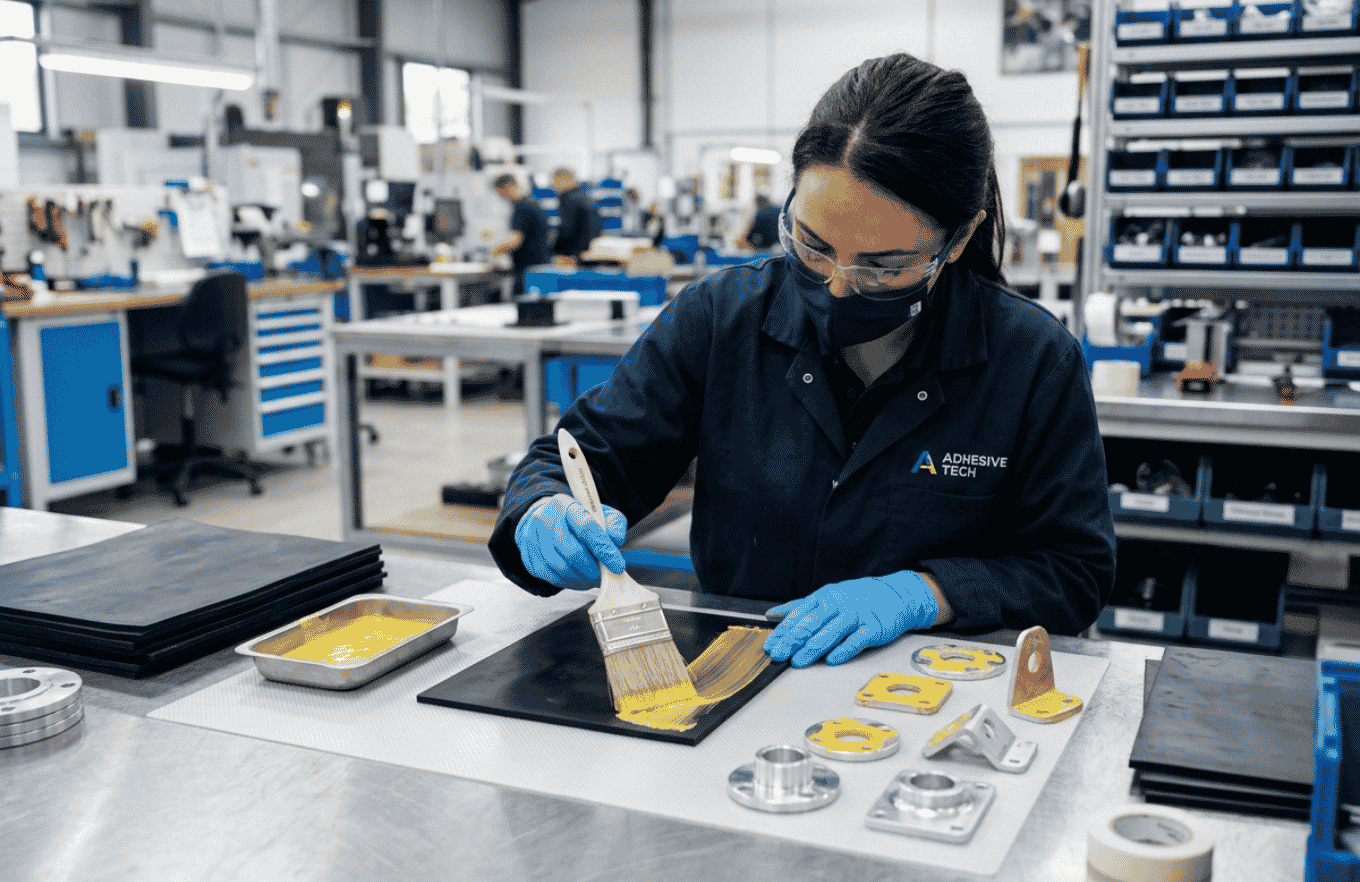
Storage is only one side of the equation. Proper handling is equally important for maintaining adhesive effectiveness.
Every adhesive formulation is unique. Application methods, mixing requirements, and drying times vary based on product design.
Professional suppliers such as Samad Adhesive provide technical guidance to help customers achieve optimal results while maintaining workplace safety.
Contaminated brushes, rollers, and spray systems can introduce unwanted particles into adhesive products.
Regular cleaning ensures consistent application and prevents bonding failures caused by foreign materials.
The First-In, First-Out (FIFO) method helps businesses use older stock before newer shipments.
Most importantly, inventory rotation prevents adhesives from exceeding their recommended shelf life, reducing waste and improving operational efficiency.
Proper handling procedures contribute not only to product performance but also to workplace safety.
Workers should understand storage requirements, handling techniques, and emergency procedures related to adhesive products.
Well-trained teams reduce risks associated with spills, contamination, and improper application.
Depending on the adhesive type, employees may require gloves, safety glasses, or respiratory protection.
A responsible Industrial Adhesive Manufacturer provides safety documentation and handling recommendations to support safe workplace operations.
Ventilation systems help manage fumes and maintain air quality in production environments.
This is particularly important when working with solvent-based formulations or large-volume applications.
Many businesses focus on application techniques while overlooking storage quality.
The reality is that improperly stored adhesives often lose their intended bonding characteristics before they are even used. Reduced tack, slower curing times, inconsistent viscosity, and weaker adhesion are common outcomes.
For manufacturers relying on Rubber Adhesive for Industrial Use, these issues can result in product defects, rework costs, customer complaints, and production delays.
By following proper storage protocols, companies can maintain consistent performance and maximize adhesive reliability.
Numerous industries rely on adhesive products to support production processes.
Furniture makers require strong and durable bonds for laminates, veneers, upholstery, and structural components.
Proper adhesive storage helps maintain consistent product quality and long-term durability.
Automotive applications often involve demanding environmental conditions.
Temperature-resistant adhesives must retain their properties from storage through final application to ensure reliable performance.
Footwear producers depend on adhesives for sole attachment and material bonding.
Consistent adhesive quality supports stronger products and reduces production defects.
Factories using Rubber Adhesive for Industrial Use require dependable bonding performance across a variety of materials and production environments.
Reliable storage practices help ensure adhesives perform as intended throughout the manufacturing process.
Choosing a knowledgeable supplier goes beyond purchasing a product.
Experienced companies like Samad Adhesive help customers understand storage requirements, handling procedures, and application best practices. Their technical expertise can help businesses reduce waste, improve productivity, and maintain product quality.
Whether supporting furniture manufacturers, industrial fabricators, or other sectors, Samad Adhesive focuses on delivering consistent performance and dependable customer support.
Additionally, Samad Adhesive provides guidance that helps businesses maximize adhesive lifespan and achieve stronger bonding outcomes.
The following practices can significantly improve adhesive performance:
Adhesive performance begins long before application. Proper storage and handling directly influence bonding strength, shelf life, workplace safety, and production efficiency. Businesses that follow professional storage guidelines experience fewer product failures, lower material waste, and more consistent manufacturing outcomes.
A trusted Industrial Adhesive Manufacturer understands these challenges and provides the expertise needed to protect adhesive quality throughout its lifecycle. By implementing proven storage and handling practices, companies can maximize performance and achieve reliable bonding results across every application.
Partner with Samad Adhesive today for expert guidance, premium industrial adhesives, and dependable support that keeps your operations efficient, safe, and productive.
Industrial adhesives should be stored in cool, dry, temperature-controlled environments away from direct sunlight, moisture, and extreme temperature fluctuations to preserve quality and performance.
Proper handling prevents contamination, maintains adhesive consistency, improves bond strength, and ensures reliable application results across industrial manufacturing processes.
Improperly stored adhesives can experience reduced bonding strength, viscosity changes, shorter shelf life, application difficulties, and increased production defects.


.svg)