A furniture product can look flawless on the outside, yet its real strength often depends on something you barely see: the adhesive holding everything together. From wooden joints and cabinet panels to laminates and decorative surfaces, choosing the wrong bonding method can lead to lifting, separation, and costly rework.
An industrial adhesive manufacturer helps furniture makers match adhesive performance with the materials and production process. Contact adhesive and PVA are both widely used, but they behave differently and suit different jobs. Understanding those differences can help manufacturers improve production efficiency, bond quality, and product durability. In this guide, we compare both options and explain where each one makes the most sense.
Contact adhesive and PVA use different bonding methods. Contact adhesive is generally applied to the surfaces, allowed to become tacky, and then joined under pressure. It can provide strong initial grab, which makes it useful for certain fast-paced applications.
PVA, commonly known as wood glue, is generally applied before materials are joined and clamped. It develops its bond as it dries and is particularly suitable for many porous wood-to-wood applications.
The choice therefore depends on more than adhesive strength. Material type, production speed, application method, and curing requirements all matter.
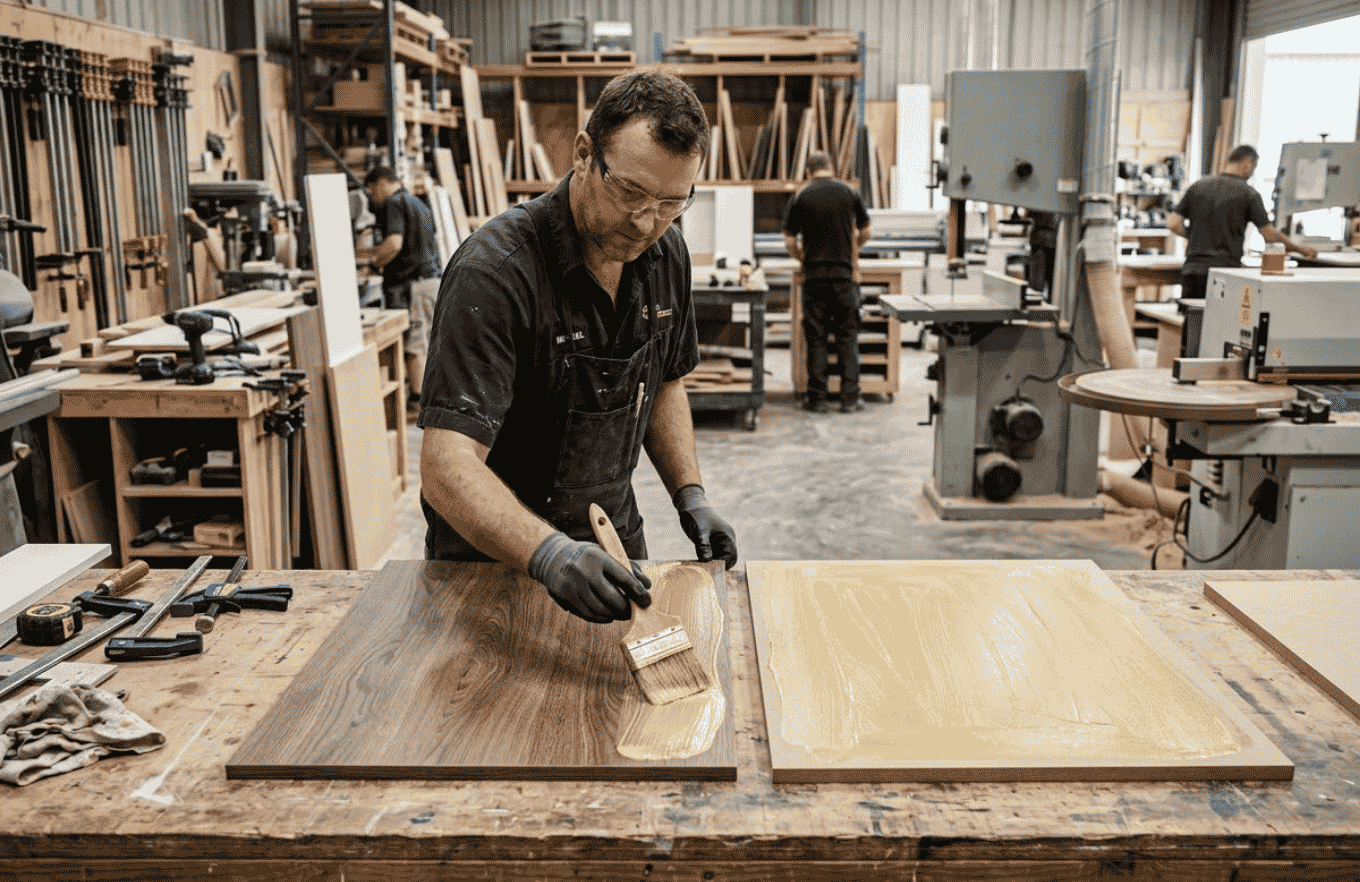
Furniture manufacturers frequently work with laminates, decorative sheets, synthetic coverings, and similar materials. These applications require reliable adhesion across broad surfaces.
A quality contact adhesive for furniture can provide strong initial tack and help hold materials securely once the coated surfaces are properly joined. This can be useful where extended clamping is inconvenient.
Modern furniture often combines MDF, plywood, laminates, plastics, and synthetic surfaces. Since these substrates have different characteristics, adhesive compatibility becomes essential.
Contact adhesive can be a practical option for selected mixed-material applications where conventional wood adhesives may not deliver the desired result.
PVA remains a popular choice for cabinet construction, wooden joints, frames, and other porous wood applications. When surfaces are properly prepared and adequately clamped, it can create a dependable bond.
For workshops using traditional woodworking methods, PVA can fit naturally into the production process.
PVA generally requires time and pressure to develop its bond. For manufacturers with suitable clamping systems and production schedules, this may not be a problem.
The key is understanding whether the adhesive's working characteristics match the workshop's workflow.
Choosing between contact adhesive and PVA should start with the material rather than the product name.
Surface compatibility is critical. Wood, MDF, laminates, plastics, and synthetic coverings can behave differently during bonding. Clean, properly prepared surfaces are also essential because dust, oil, moisture, and residues can interfere with adhesion.
Production speed matters too. A high-volume manufacturer may value faster handling, while a smaller workshop may have more flexibility for clamping and curing.
Environmental exposure should also be considered. Humidity, temperature changes, and everyday movement can place additional stress on furniture bonds.
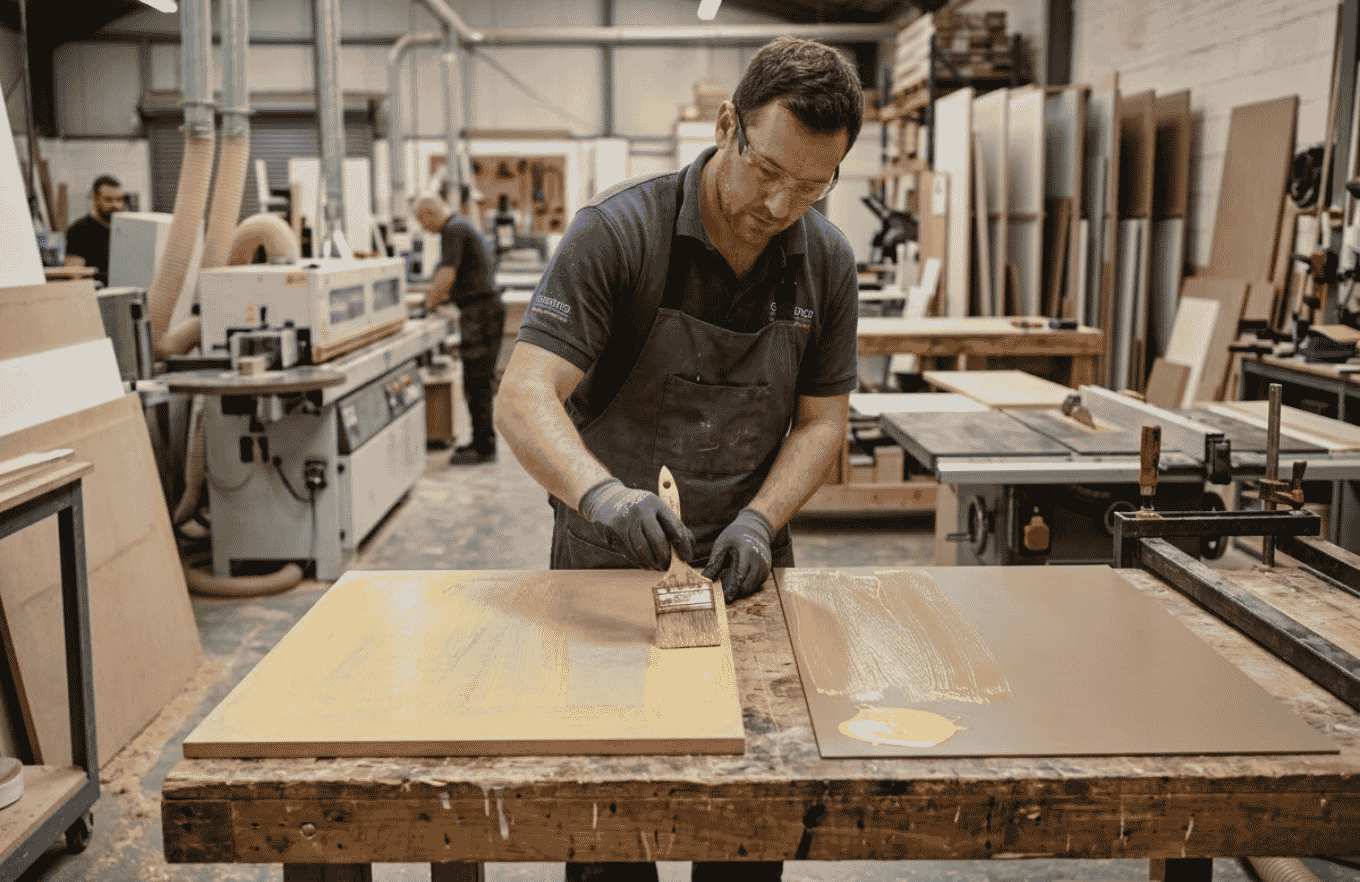
The cheapest adhesive is not always the most economical choice. Inconsistent bonding can result in damaged components, rework, production delays, and customer complaints.
An experienced industrial adhesive manufacturer can help manufacturers evaluate these factors before selecting a product.
Samad Adhesive provides bonding solutions for demanding industrial applications. Its Samad Bond Ultra is designed for strong, durable bonding and is used across furniture and other manufacturing sectors.
A contact adhesive for furniture can be a strong option for laminates, decorative surfaces, and selected mixed-material applications where initial grab is important.
PVA, meanwhile, remains highly useful for many porous wood-to-wood applications where clamping is practical.
Before adopting an adhesive throughout production, manufacturers should conduct application trials. Testing tack, handling time, coverage, bond quality, surface appearance, and performance under realistic conditions can reveal problems before they become expensive.
Moreover, discussing the application with a knowledgeable supplier can make selection much easier.
Product selection is only one part of successful bonding. Consistent supply, technical guidance, and dependable product quality are equally important.
Samad Adhesive helps manufacturers approach adhesive selection according to their actual materials and production requirements. This can reduce guesswork and support more consistent manufacturing results.
Contact adhesive and PVA both have valuable roles in furniture production. PVA is particularly practical for many wood-to-wood applications, while contact adhesive can offer advantages for laminates, decorative surfaces, and selected mixed substrates.
The smartest choice comes from evaluating materials, production speed, application conditions, and required performance rather than simply choosing the most familiar adhesive.
Contact Samad Adhesive for reliable furniture bonding solutions matched to your materials, workflow, and long-term performance requirements.
A suitable contact adhesive can work well for laminate furniture because it provides strong initial grab and reliable surface bonding.
PVA is often well suited to porous wood-to-wood joints, while contact adhesive may be more appropriate for laminates and certain mixed-material applications.
They should evaluate substrate compatibility, bond requirements, application method, production speed, curing conditions, and expected environmental exposure.

.svg)