In modern manufacturing, products are rarely made from a single material. Wood meets metal, fabric meets foam, and plastics meet composites in complex assemblies. This shift has made the role of an Industrial Adhesive Manufacturer more critical than ever. Instead of relying on traditional fasteners, industries now depend on advanced adhesive technologies to create seamless, durable bonds across different surfaces.
Multi-material bonding is not just about sticking things together. It requires precision, compatibility, and long-term performance under varying conditions. From furniture to automotive interiors, manufacturers need adhesives that adapt to different textures, expansion rates, and environmental stresses. This is where specialized adhesive solutions step in, offering flexibility, strength, and efficiency in one package.
Combining different materials introduces several challenges that standard adhesives cannot handle effectively.
Each material behaves differently. Wood is porous, metal is smooth, and plastics can be chemically resistant. Achieving a strong bond between these surfaces requires adhesives engineered to interact with each material at a molecular level.
A high-performance Rubber Adhesive for Industrial Use is often preferred because it offers flexibility and strong initial tack, allowing it to bond uneven or mixed surfaces effectively.
Materials expand and contract at different rates when exposed to heat, moisture, or pressure. Without the right adhesive, this movement can weaken the bond over time.
Advanced adhesive formulations are designed to absorb these stresses, maintaining structural integrity even in changing environments.
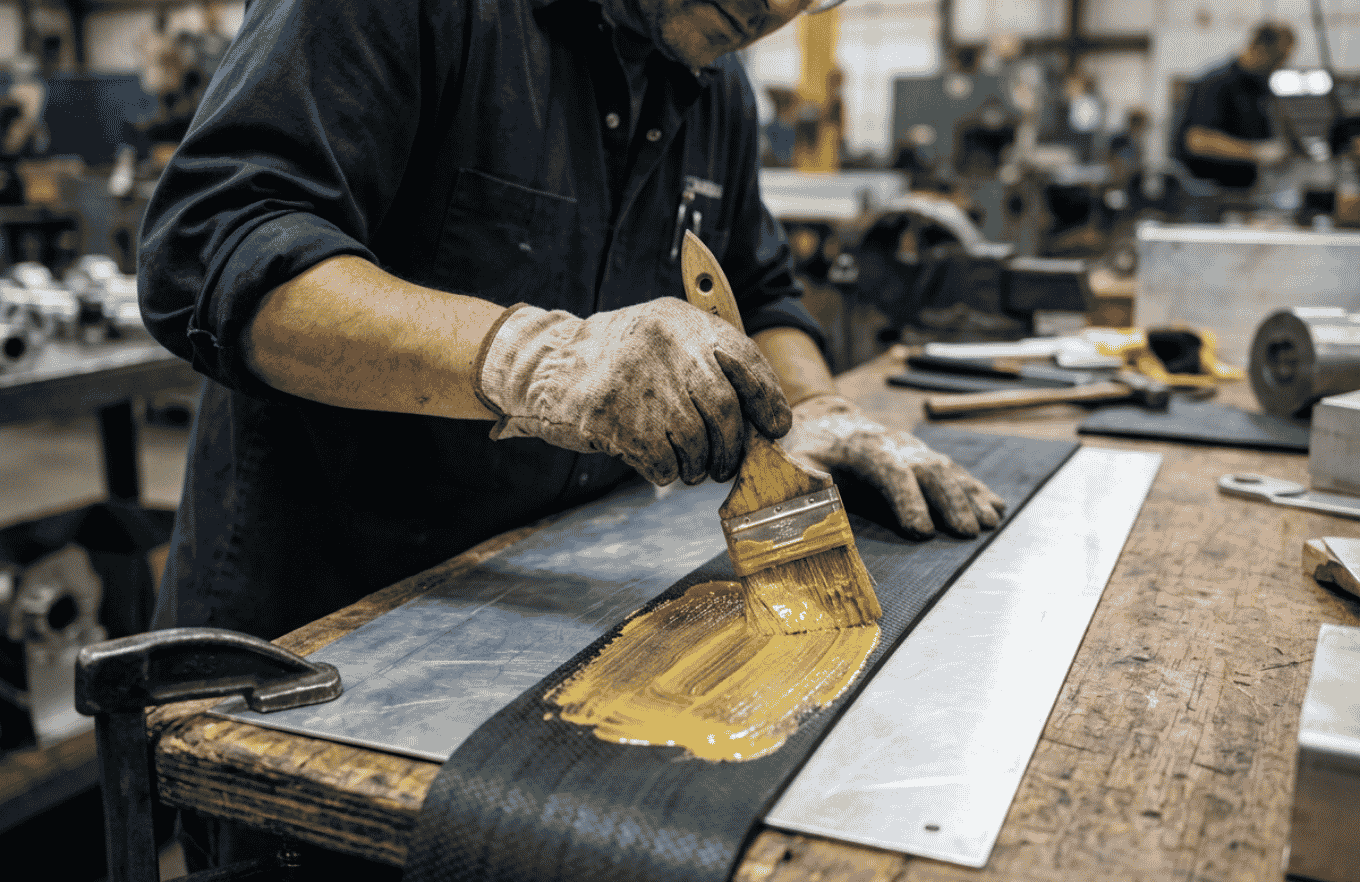
An experienced Industrial Adhesive Manufacturer focuses on developing products that address these exact challenges.
Rubber-based adhesives are widely used in multi-material bonding because they remain flexible after curing. This flexibility allows them to handle movement between different materials without cracking or losing adhesion.
Samad Supertex Gold X-1100 is a strong example of this capability. As a high-performance rubber adhesive for industrial use, it delivers superior bonding across wood, leather, tiles, metals, and furniture applications. Its formulation ensures durability even under demanding conditions.
Multi-material bonding often requires adhesives that hold components instantly while maintaining long-term durability. High-quality adhesives achieve this balance by combining fast grab with strong curing properties.
Manufacturers like Samad Adhesive design their solutions to meet these dual requirements, ensuring both immediate handling strength and lasting performance.
Multi-material bonding is essential in several industries where different materials must work together seamlessly.
Modern furniture combines wood, laminates, foam, and fabric. A reliable Rubber Adhesive for Industrial Use ensures these components remain securely bonded over time.
Products such as Samad Supertex Gold X-1100 are widely used in furniture assembly because they provide strong adhesion across varied surfaces without compromising flexibility.
Automotive interiors involve bonding textiles, plastics, and metals. Adhesives must withstand heat, vibration, and constant use.
Solutions developed by Samad Adhesive are designed to perform under these demanding conditions, making them suitable for both industrial and commercial applications.
Footwear manufacturing requires bonding leather, rubber, and synthetic materials. Adhesives must be flexible yet strong to handle repeated stress.
While specialized products like Ultra Bond and JET adhesive cater to these needs, rubber-based solutions remain essential for broader industrial bonding requirements.

Choosing the right adhesive partner directly impacts production efficiency and product quality.
Reliable manufacturers ensure that every batch of adhesive performs the same way. This consistency reduces production errors and improves workflow stability.
Companies working with Samad Adhesive benefit from strict quality control processes that ensure dependable results.
Multi-material bonding often requires guidance on application techniques and material compatibility.
● An experienced Industrial Adhesive Manufacturer provides:
● Technical recommendations based on material combinations
● Guidance on surface preparation and application methods
● Solutions tailored to specific production challenges
This level of support helps businesses optimize their bonding processes and reduce trial-and-error costs.
Multi-material bonding solutions are not just about strength; they also improve manufacturing efficiency.
Adhesives eliminate the need for drilling, welding, or mechanical fastening. This speeds up production lines and reduces labor requirements.
Unlike screws or nails, adhesives create seamless bonds without visible marks. This improves the overall appearance of finished products.
A dependable Rubber Adhesive for Industrial Use ensures both structural strength and visual appeal, making it ideal for industries where aesthetics matter.
Efficient bonding solutions contribute to long-term cost savings.
Strong adhesives minimize bonding failures, reducing the number of defective products.
Durable bonds reduce the need for repairs and replacements, improving overall product reliability.
Businesses that partner with Samad Adhesive often see improvements in cost efficiency due to reduced rework and consistent adhesive performance.
Partner with Samad Adhesive to upgrade your multi-material bonding with reliable performance, expert support, and advanced adhesive solutions built for demanding industrial applications.
Multi-material bonding has become a defining feature of modern manufacturing. It requires adhesives that can handle different surfaces, environmental conditions, and mechanical stresses without compromising performance.
An experienced Industrial Adhesive Manufacturer provides the expertise and technology needed to achieve these results. From flexible bonding formulations to consistent product quality, the right partner helps businesses overcome complex bonding challenges.
Solutions like Samad Supertex Gold X-1100 highlight how advanced adhesive technology supports industries in creating durable, high-quality products across multiple materials. With the right adhesive strategy, manufacturers can improve efficiency, reduce costs, and build products that stand the test of time.
Multi-material bonding is complex because different materials have unique surface properties, requiring specialized adhesives for strong and durable connections.
Rubber adhesives provide flexibility, strong initial tack, and compatibility with various surfaces, making them effective for multi-material bonding applications.
It delivers high-performance adhesion across wood, leather, tiles, metals, and furniture, ensuring strong, reliable bonds in demanding industrial environments.

.svg)