Rubber bonding plays a critical role across industries ranging from automotive and furniture to footwear and industrial manufacturing. A strong adhesive bond determines whether products survive pressure, heat, movement, and long-term wear. That is why businesses increasingly rely on an experienced Industrial adhesive manufacturer to improve bonding performance and reduce costly production issues.
Poor rubber bonding can lead to peeling, cracking, material separation, and product failure. Moreover, inconsistent bonding slows production lines and increases material waste. Manufacturers that understand the science behind rubber adhesion can help businesses avoid these problems while improving operational efficiency. The right techniques, paired with quality adhesive solutions, create stronger and more reliable industrial products that perform consistently under demanding conditions.
Rubber is naturally flexible and resistant to many bonding methods. This makes adhesive selection extremely important in industrial applications.
Unlike porous materials, rubber surfaces often resist adhesion because of their smooth and elastic structure. Furthermore, oils, dust, and chemical residues can weaken bonding strength if surfaces are not properly prepared.
An experienced adhesive supplier understands how different rubber compounds behave under industrial conditions. This knowledge helps manufacturers achieve stronger and longer-lasting adhesion.
Different rubber materials require different bonding approaches. Natural rubber, nitrile rubber, neoprene, and synthetic compounds all react differently to adhesives.
Using the wrong formulation may result in weak bonds or premature failure. Most importantly, businesses working with trusted suppliers receive guidance on selecting adhesives designed specifically for their application requirements.

Strong bonding starts long before adhesive application begins.
Dust, oil, grease, and moisture are common causes of adhesive failure. Rubber surfaces should always be cleaned thoroughly before applying any bonding solution.
Manufacturers often underestimate how much contamination affects adhesive performance. However, even high-quality adhesives struggle when surfaces are not properly prepared.
Slightly roughening rubber surfaces creates better mechanical grip for adhesives. This process improves bonding strength by increasing surface area contact.
Furthermore, roughened surfaces allow adhesives to penetrate more effectively, creating a more stable and durable bond.
Businesses that partner with Samad Adhesive often benefit from technical recommendations that improve preparation methods and overall bonding consistency.
Adhesive performance depends heavily on selecting the right product for the job.
Industrial environments expose bonded materials to heat, pressure, vibration, and chemicals. Therefore, manufacturers must choose products capable of handling these conditions.
A reliable rubber adhesive for industrial use should provide:
● Strong initial tack
● Long-term flexibility
● Heat resistance
● Chemical resistance
● High peel strength
Without these characteristics, bonded materials may fail under stress.
Different industries require different bonding properties. Automotive applications may prioritize heat resistance, while furniture manufacturing may focus more on flexibility and clean finishing.
An experienced Industrial adhesive manufacturer helps businesses identify formulations that align with production goals and performance expectations.
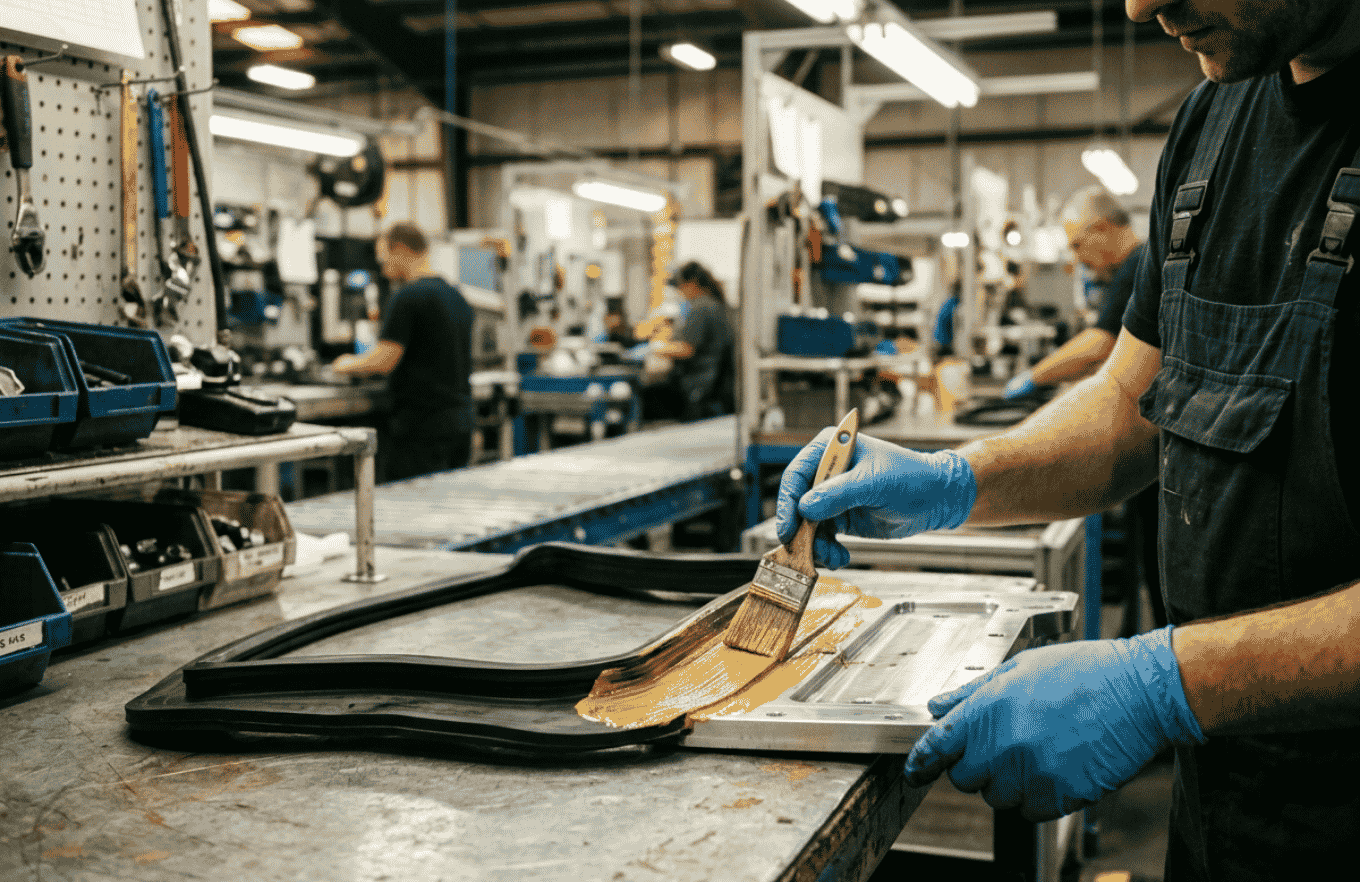
Even premium adhesives require proper application techniques to perform effectively.
Uneven adhesive layers create weak spots that reduce bond reliability. A smooth and consistent application ensures balanced bonding pressure across surfaces.
Moreover, excessive adhesive can be just as harmful as insufficient application because it affects curing performance.
Many industrial adhesives require a short waiting period before surfaces are pressed together. This allows solvents to evaporate and improves final adhesion strength.
Rushing this process often leads to poor bonding quality and long-term durability issues.
Companies working with Samad Adhesive receive guidance on proper application timing to maximize adhesive performance.
Temperature and humidity play a major role in adhesive behavior.
Extreme temperatures can affect adhesive curing and flexibility. Cold environments may slow curing times, while excessive heat may weaken adhesive stability during application.
Most importantly, maintaining stable working conditions improves consistency across production batches.
Moisture trapped between surfaces weakens adhesion and creates bonding failures over time. Industrial facilities should maintain controlled humidity levels whenever possible.
Reliable Rubber adhesive for industrial use is often engineered to tolerate varying environmental conditions while maintaining strong bonding performance.
Strong rubber bonding is not just about applying adhesive. It also requires ongoing quality monitoring.
Manufacturers should regularly test bonded materials under stress conditions to identify weaknesses early.
Testing methods may include:
● Peel resistance testing
● Heat exposure testing
● Flexibility testing
● Tensile strength evaluation
These assessments help manufacturers maintain consistent product quality.
Improper adhesive storage can reduce product effectiveness before application even begins. Adhesives should always be stored according to manufacturer guidelines.
Furthermore, expired products should never be used in industrial production because chemical stability decreases over time.
Businesses partnering with Samad Adhesive often benefit from technical support regarding adhesive handling and storage practices.
Investing in proper bonding techniques delivers measurable business advantages.
Strong adhesive bonds increase product lifespan and reduce customer complaints related to material separation or failure.
Reliable bonding minimizes rework, material waste, and production downtime. As a result, businesses improve operational efficiency and overall profitability.
A dependable Rubber adhesive for industrial use becomes more than just a manufacturing material. It becomes a critical part of long-term business success.
Industrial adhesive technology continues evolving to meet modern manufacturing demands.
Today’s advanced adhesives offer improved flexibility, stronger environmental resistance, and better compatibility with complex materials. Furthermore, manufacturers increasingly seek eco-conscious solutions that maintain high performance while reducing environmental impact.
Experienced suppliers continue investing in research and development to support industries that require stronger, smarter, and more efficient bonding systems.
Partner with Samad Adhesive today for advanced rubber bonding solutions that improve durability, efficiency, product strength, and long-term industrial manufacturing performance.
Rubber bonding may seem like a technical detail, but it directly impacts product quality, durability, and manufacturing efficiency. Businesses that overlook proper bonding techniques often face higher costs, weaker products, and operational delays.
Working with an experienced Industrial adhesive manufacturer provides access to specialized knowledge, advanced adhesive solutions, and technical support that improve overall production performance. Moreover, selecting the right Rubber adhesive for industrial use ensures stronger bonds that withstand demanding industrial environments.
With the right preparation methods, adhesive selection, and application techniques, manufacturers can achieve consistent and long-lasting bonding results that support long-term business growth.
Rubber surfaces are naturally flexible and resistant to adhesion, making proper preparation and adhesive selection essential for strong bonding performance.
Industrial rubber adhesives should offer flexibility, heat resistance, strong peel strength, and long-term durability under demanding conditions.
Experienced manufacturers provide technical guidance, advanced formulations, and application recommendations that help businesses achieve stronger and more reliable adhesive bonds.

.svg)