Adhesive failures are frustrating, costly, and avoidable, yet many users repeat the same mistakes because of long-held myths that refuse to die. An industrial adhesive manufacturer spends its days studying how materials behave, how surfaces react, and why bonds weaken when they should not. By the time you finish reading this, you will understand how closely this field connects science and practice, and why relying on old assumptions can quietly damage quality and productivity.
When guidance comes from an experienced industrial adhesive manufacturer, these myths stop being harmless and become clear obstacles that can derail an entire production line. Understanding the truth behind them gives users better control and far more consistent bonding outcomes.
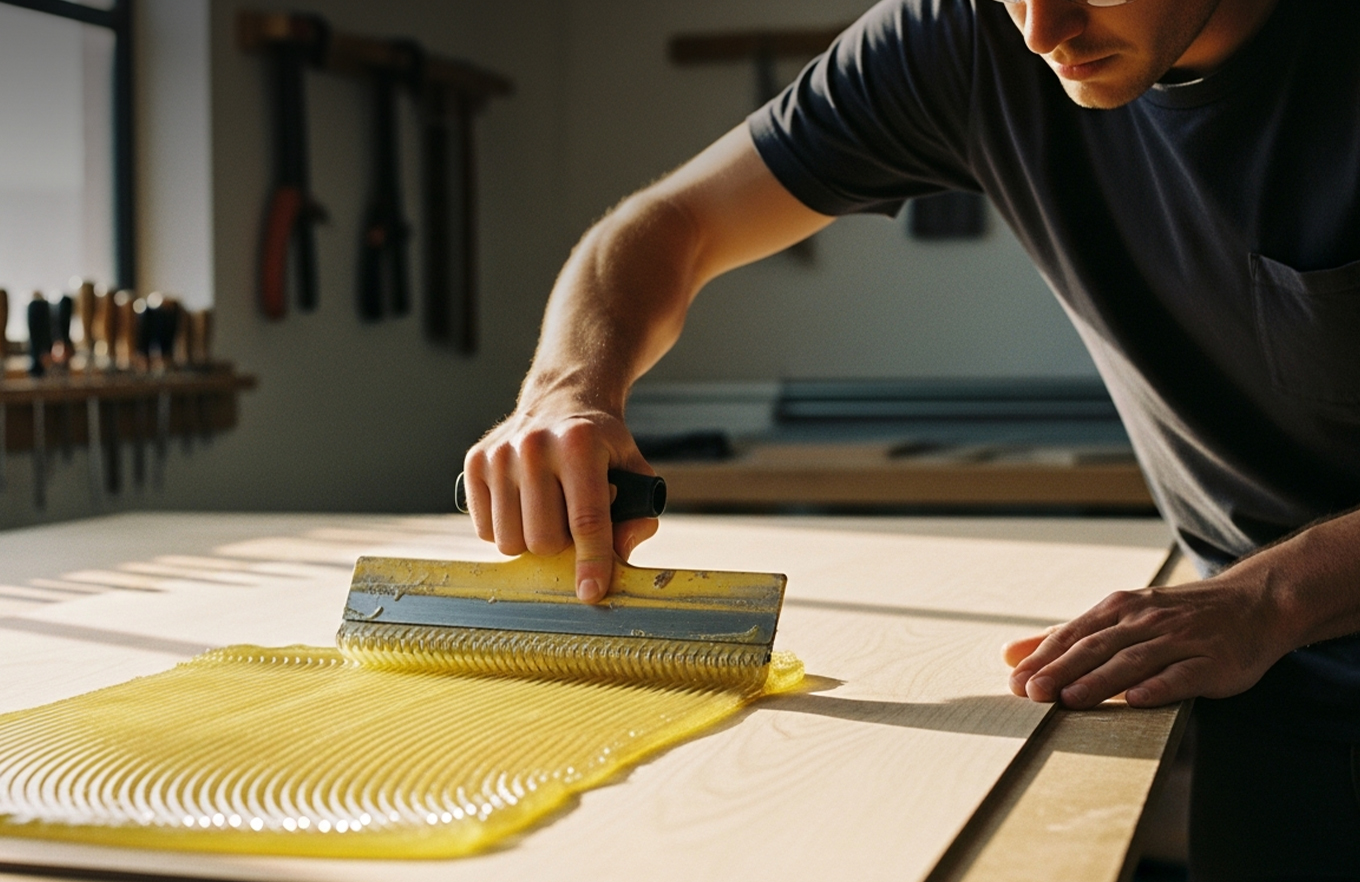
The assumption that heavy application guarantees durability is one of the oldest misunderstandings. In practice, adhesive performance depends on correct coverage, not excessive volume. When too much glue is used, it limits airflow, slows solvent evaporation, and leaves pockets that weaken the structure. This is especially true when dealing with solvent-based solutions such as Samad Bond, where the chemistry works best within an ideal spread range. A seasoned industrial adhesive manufacturer sees this mistake across workshops and factories, usually when workers attempt to compensate for poor surface preparation. Applying adhesive in controlled, even layers delivers far better strength than piling on extra material and hoping it compensates for other issues.
A surface may appear clean, yet oils, fine dust, previous coatings, and natural residues remain invisible to the eye. These micro-layers block proper adhesion and create weak points that eventually lead to failure. An industrial adhesive manufacturer often spends more time explaining surface behavior than discussing the adhesive itself because cleaning or roughening is often the step customers neglect. Giants such as Samad Adhesive highlight again and again that even high-performance solutions like Samad Bond 101 cannot overcome a poorly prepared base. This is why training manuals, especially in furniture settings where a contact adhesive for furniture must grip instantly, emphasise cleaning as a non-negotiable step.
This myth causes widespread damage in production and repair work. Different substrates expand, flex, react to heat, or absorb solvents at different rates. An industrial adhesive manufacturer considers these behaviors before recommending any product because ignoring them can shorten the life of a finished item. Over time, mismatched adhesives lead to peeling edges, brittle joints, or complete bond separation. This is where formulas such as Samad Bond become valuable, because they are developed with specific materials and applications in mind. When working on dense materials or long-term structural fixings, using the wrong adhesive simply creates a delayed failure that reveals itself only when the final product is already in use.
Users often believe the quickest drying adhesive is automatically the most advanced. In reality, drying speed is influenced by temperature, airflow, thickness, and chemistry, and none of these alone determines quality. A professional industrial adhesive manufacturer reminds customers that curing and bonding are two different processes. A surface may feel dry within minutes, yet its internal structure may still be forming. Premature stress on an incompletely cured joint causes long-term weakness. Even high-quality products such as Samad Adhesive recommend allowing proper bonding time regardless of how quickly the layer becomes touch-dry. Samad Bond 101, known for its strength in furniture applications, delivers its best results when curing is respected rather than rushed.

This is a gentle myth that many avoid discussing, yet it appears across industries. Adhesives cannot compensate for poor fitting, uneven surfaces, or structural misalignment. A reliable industrial adhesive manufacturer sees how this belief drains efficiency and weakens quality control. Adhesives work as partners to good workmanship, not replacements for it. If a gap is wide, a corner is poorly shaped, or two parts do not naturally meet, even a strong contact adhesive for furniture cannot correct the underlying flaw. The adhesive should enhance mechanical fit, not rescue it. This is why products like Samad Bond insist on proper measurement, trimming, and alignment before applying any adhesive layer.
Strengthen every project with expert guidance and premium bonding support by contacting us today for personalized industrial adhesive solutions.
When the core myths around adhesion are cleared, users finally work with adhesives the way manufacturers intend. These truths reflect years of research, testing, and close observation by every industrial adhesive manufacturer committed to improving bonding performance. Understanding proper application, respecting curing behavior, selecting the right formula, and maintaining good craftsmanship all lead to stronger, longer-lasting results. Products such as Samad Bond show what modern chemistry can achieve, but only when used with reliable knowledge. When myths fade, and correct practices take their place, every stage of production becomes smoother, more predictable, and far more efficient.
The best adhesive depends on how each material handles heat, weight, expansion, and flexibility. An industrial adhesive manufacturer evaluates these properties before choosing or recommending a formula.
Yes, it does. Even strong products such as Samad Bond 101 perform their best only when surfaces are dry, clean, and properly conditioned before application.
Curing time varies with temperature, ventilation, and adhesive type, but an industrial adhesive manufacturer always advises waiting until the internal structure is fully set rather than relying on surface dryness alone.

.svg)