In modern manufacturing, efficiency is not just a goal; it is a survival strategy. Rubber adhesive for industrial use has become a preferred bonding solution across industries because it delivers strength, flexibility, and speed in production lines. From footwear assembly to automotive components, manufacturers rely on this adhesive type to maintain consistent output while reducing downtime. Its quick-curing properties and reliable bonding make it especially valuable in fast-paced environments where delays cost money.
Companies such as Samad Adhesive have refined formulations that meet demanding industrial standards, helping manufacturers improve workflow without sacrificing durability. Understanding how this adhesive contributes to operational efficiency reveals why it is increasingly considered a smart investment rather than just another production material.
Production facilities operate on strict timelines, and bonding solutions directly influence how quickly products move along assembly lines. Rubber adhesive for industrial use allows rapid application and setting, reducing waiting periods between stages. Faster bonding means workers can complete tasks without interruptions, which ultimately improves daily output. A professional industrial adhesive manufacturer designs formulations specifically to support high-speed production environments where consistency matters as much as strength.
Traditional joining methods like screws or rivets slow down production and increase labor costs. Rubber-based adhesives eliminate the need for these mechanical fasteners, simplifying assembly processes. Samad Adhesive provides industrial-grade solutions that allow manufacturers to replace multiple fastening steps with a single bonding application. This streamlined process cuts costs and saves valuable production time.
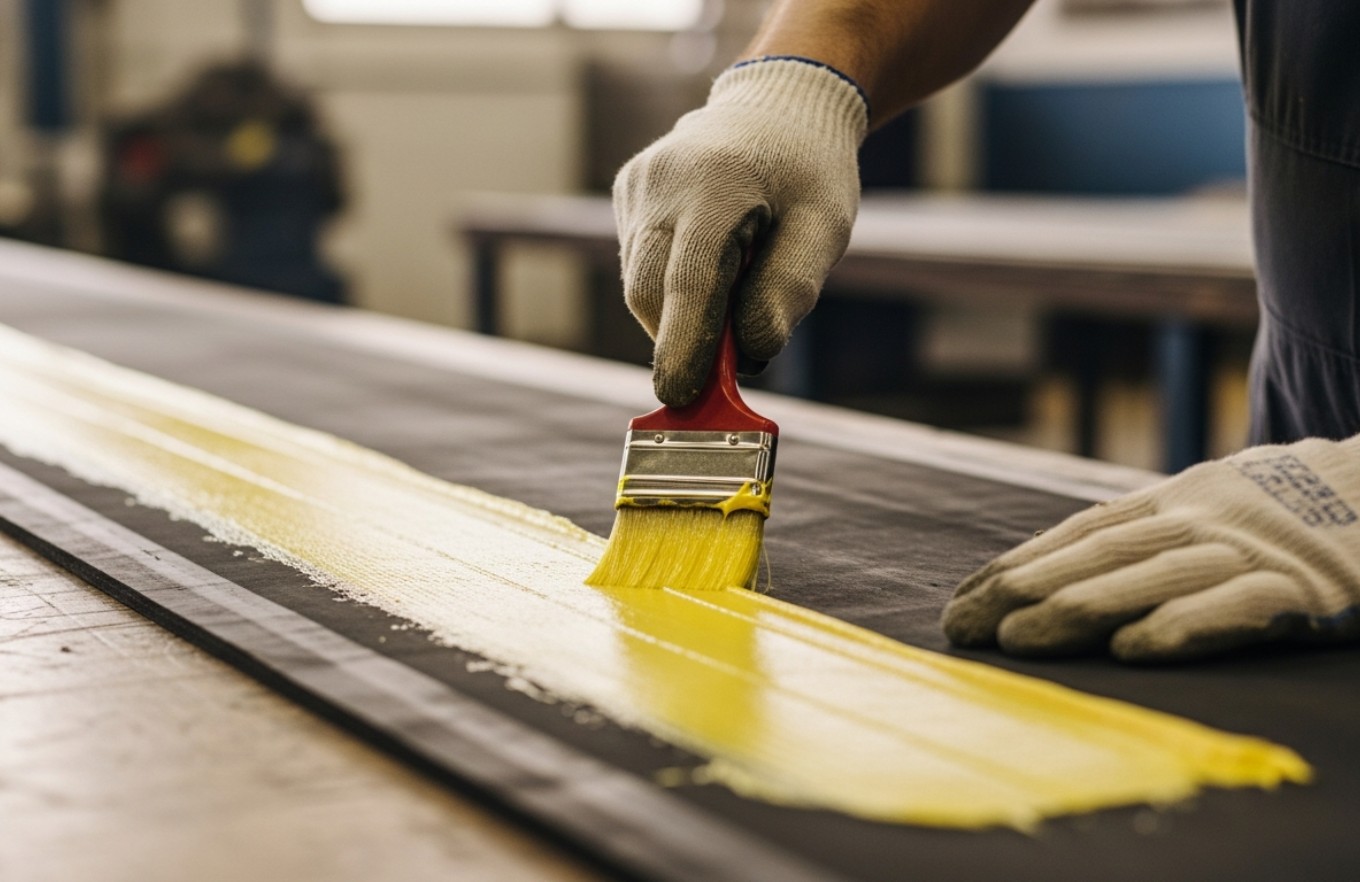
One reason rubber adhesive for industrial use improves efficiency is its ability to bond different materials. Industrial production often involves rubber, leather, plastics, metals, and fabrics. Instead of switching adhesives for each material type, manufacturers can rely on a single solution that performs consistently. This reduces inventory complexity and prevents errors caused by using the wrong adhesive.
Industrial products frequently experience vibration, movement, or temperature changes. Rigid bonding agents may crack or fail under these conditions. Rubber adhesives maintain elasticity, allowing bonded components to flex without breaking. Samad Adhesive develops formulations designed to withstand industrial stress conditions, ensuring long-lasting bonds that reduce product failure rates.
Modern adhesive dispensing systems apply precise amounts of material, preventing overuse or spillage. When paired with high-quality rubber adhesive for industrial use, this precision ensures uniform bonding across production batches. Consistent results reduce rejected products and rework, saving both materials and labor costs. An experienced industrial adhesive manufacturer understands how formulation viscosity affects dispensing accuracy.
Poor bonding leads to defective products that must be discarded or repaired. Reliable adhesives reduce this risk significantly. Samad Adhesive focuses on quality control processes that maintain uniform composition, helping manufacturers avoid production losses caused by inconsistent adhesive performance.
Many industrial adhesives are formulated to produce minimal fumes and residue. This creates a safer working environment and reduces cleanup time. Rubber adhesive products designed for industrial use often feature controlled evaporation rates that prevent excessive vapor release. Such characteristics allow production teams to maintain productivity without frequent interruptions for ventilation adjustments.
Mechanical fastening tools and welding equipment require regular maintenance. Adhesive bonding systems place less strain on machinery, extending equipment lifespan. By switching to rubber adhesive for industrial use, manufacturers can lower maintenance expenses and reduce downtime caused by tool repairs. Samad Adhesive supplies products that support smooth operation with minimal equipment stress.
Adhesive bonding typically requires fewer steps than mechanical assembly. Workers can apply adhesive quickly and move to the next task while curing occurs. This efficiency lowers labor hours per product. A reliable industrial adhesive manufacturer develops solutions that balance curing speed with bond strength, allowing manufacturers to optimize both time and cost.
Production efficiency is not only about speed; it is also about reducing returns and repairs. Durable bonds ensure finished products perform well in real-world conditions. Samad Adhesive produces rubber adhesive solutions engineered for long-term performance, helping manufacturers maintain customer satisfaction while minimizing warranty claims.
Automation is transforming industrial production, and adhesives must adapt to automated dispensing technologies. Rubber adhesive for industrial use is often formulated for machine compatibility, ensuring smooth flow and accurate application. This compatibility supports robotics and automated assembly lines, allowing factories to scale production efficiently.
Consistency is essential in automated manufacturing. Variations in adhesive viscosity or curing time can disrupt entire production lines. Professional manufacturers such as Samad Adhesive test products rigorously to ensure stable performance under varying environmental conditions. This reliability allows automated systems to operate without unexpected interruptions.
The shoe and leather industries rely heavily on rubber adhesives because they provide strong yet flexible bonds. These properties allow footwear to endure repeated bending and pressure. An experienced industrial adhesive manufacturer supplies formulations tailored for these applications, ensuring efficient production cycles and dependable results.
Automotive assembly lines use adhesives for interior panels, seals, and insulation materials. Construction industries also utilize rubber adhesives for flooring and insulation installation. In both sectors, rubber adhesive for industrial use supports rapid application and durable bonding, improving productivity across large-scale operations.

Research and development play a vital role in adhesive efficiency. Modern formulations are designed to cure faster, bond stronger, and last longer than earlier versions. Samad Adhesive invests in innovation to ensure its products meet evolving industrial demands while maintaining safety and environmental compliance.
Industrial buyers prioritize adhesives that comply with international quality benchmarks. Certified manufacturing processes guarantee reliability and safety. By choosing a trusted industrial adhesive manufacturer, companies ensure they receive products tested for performance, durability, and consistency in demanding environments.
Contact Samad Adhesive today for high-performance rubber bonding solutions tailored to your industrial production needs.
Efficiency in manufacturing depends on reliable materials, streamlined processes, and consistent results. Rubber adhesive for industrial use supports all three by offering fast bonding, flexibility, and durability across a wide range of applications. From reducing assembly time to minimizing product defects, it plays a crucial role in modern production systems. Manufacturers that partner with experienced suppliers such as Samad Adhesive gain access to advanced formulations designed for performance and reliability. As industries continue to adopt automation and faster workflows, high-quality adhesive solutions will remain essential for maintaining productivity, controlling costs, and delivering products that meet rigorous quality expectations.
Rubber adhesive for industrial use cures quickly and bonds multiple materials, allowing faster assembly and fewer production delays.
An industrial adhesive manufacturer ensures consistent quality, technical support, and formulations designed for specific industrial applications.
Footwear, automotive, construction, and furniture industries benefit most due to strong bonding, flexibility, and efficient application processes.

.svg)