Buying industrial adhesive for the first time can seem straightforward: identify the material, compare a few products, and place an order. In practice, the decision involves far more than choosing a product with strong bonding claims. New buyers sometimes focus heavily on price, packaging, or immediate tack while overlooking application conditions, material compatibility, and the support needed for consistent results. This is where working with experienced Industrial Adhesive Manufacturers becomes relevant, because the adhesive itself is only one part of the bonding process. In this blog, we’ll look at the common assumptions that can create problems and explain what buyers should consider before selecting an adhesive for furniture and other manufacturing applications.
Strength sounds convincing, but it does not automatically mean an adhesive is suitable for every material or production process. Wood, laminates, rubber, plastics, fabrics, and other surfaces can behave very differently during bonding.
A product needs to match the materials involved, the required bond strength, application method, drying conditions, and expected use. Samad Adhesive approaches bonding requirements through products designed for specific applications rather than treating one adhesive as a universal solution.
For furniture production, the distinction becomes particularly important. A Contact Adhesive for Furniture needs to provide the right combination of adhesion, application behavior, and finish for the surfaces being joined.
A lower purchase price can look attractive during initial comparisons, but adhesive costs should not be viewed in isolation. Poor bonding can contribute to rework, material waste, production interruptions, and inconsistent finished products.
New buyers should consider how the adhesive behaves throughout the actual manufacturing process. Application efficiency, bonding performance, material compatibility, and the amount required per job can all affect the overall value of a product.
Moreover, a slightly different adhesive formulation may make more sense when it reduces avoidable production issues. The goal is not simply to pay less per container but to understand what the adhesive contributes to the complete process.
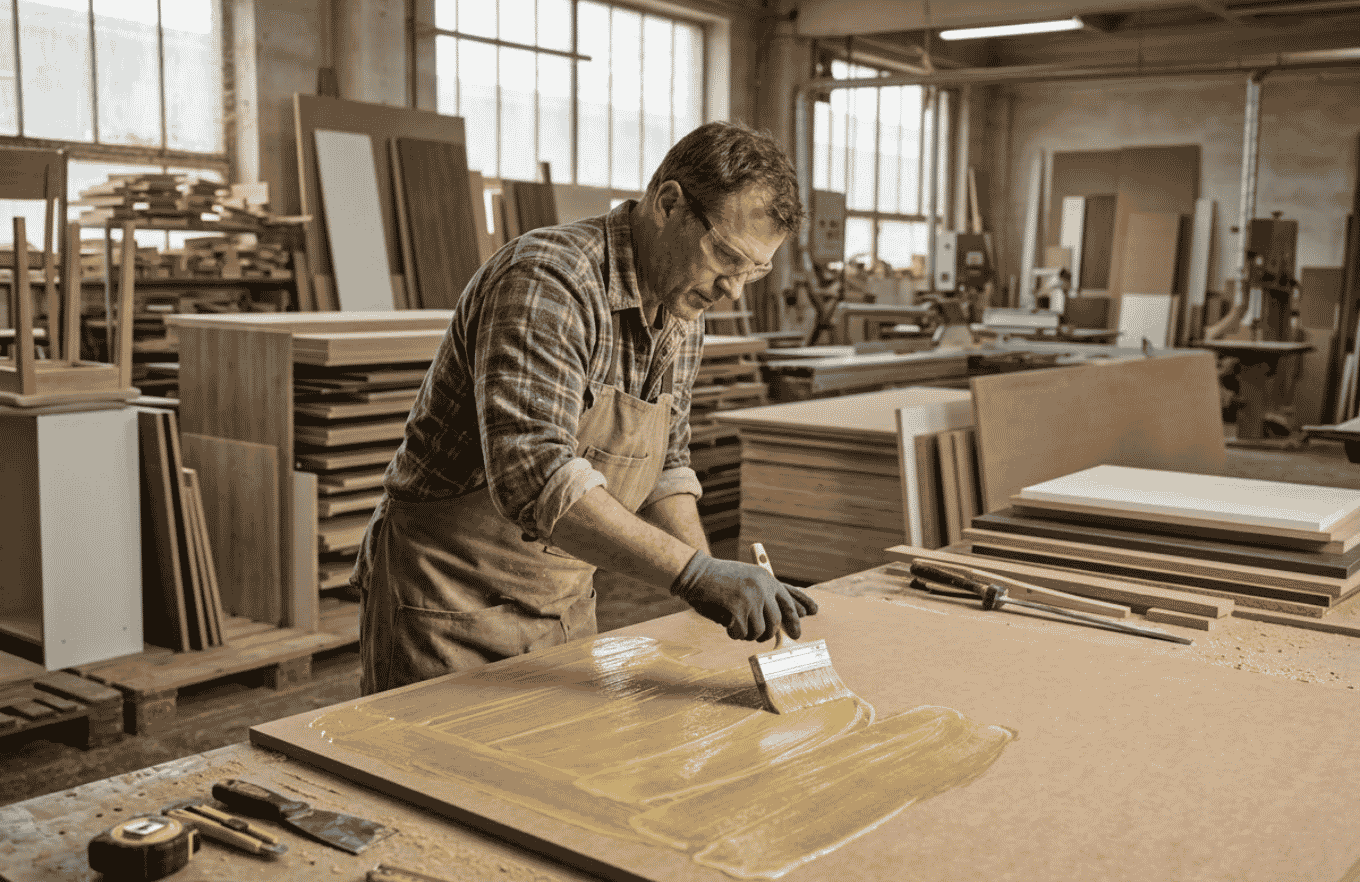
Even an appropriate adhesive can perform poorly when application conditions are overlooked. Surface preparation, adhesive coverage, drying time, pressure, and handling can all influence the final bond.
This is particularly relevant when using Contact Adhesive for Furniture, where surfaces need suitable preparation and application practices to achieve the intended result. Buyers should ask manufacturers about application requirements instead of assuming that every adhesive can be handled in exactly the same way.
Samad Bond 101, for example, is a polychloroprene-based contact adhesive developed for furniture bonding. Understanding its intended application helps buyers use the product according to its strengths rather than simply treating it as another general-purpose glue.
Product selection becomes easier when buyers can discuss their actual requirements before ordering. Surface types, production volume, working environment, and application method can change which adhesive makes practical sense.
Good communication with Industrial Adhesive Manufacturers can therefore prevent a mismatch before it reaches the production floor. A buyer who explains the complete application gives the manufacturer useful context for discussing suitable options.
Most importantly, buyers should not hesitate to ask questions about compatibility, application, storage, and expected performance. These details are part of making an informed purchasing decision, not unnecessary technicalities.
The adhesive may be hidden once manufacturing is complete, but its role is not. Bonding quality can influence how a finished furniture component holds together during handling and everyday use.
A suitable Contact Adhesive for Furniture should therefore be considered as part of the product's overall construction rather than an isolated consumable. Samad Adhesive offers Samad Bond 101 for furniture applications, giving buyers an option specifically positioned around strong contact bonding.
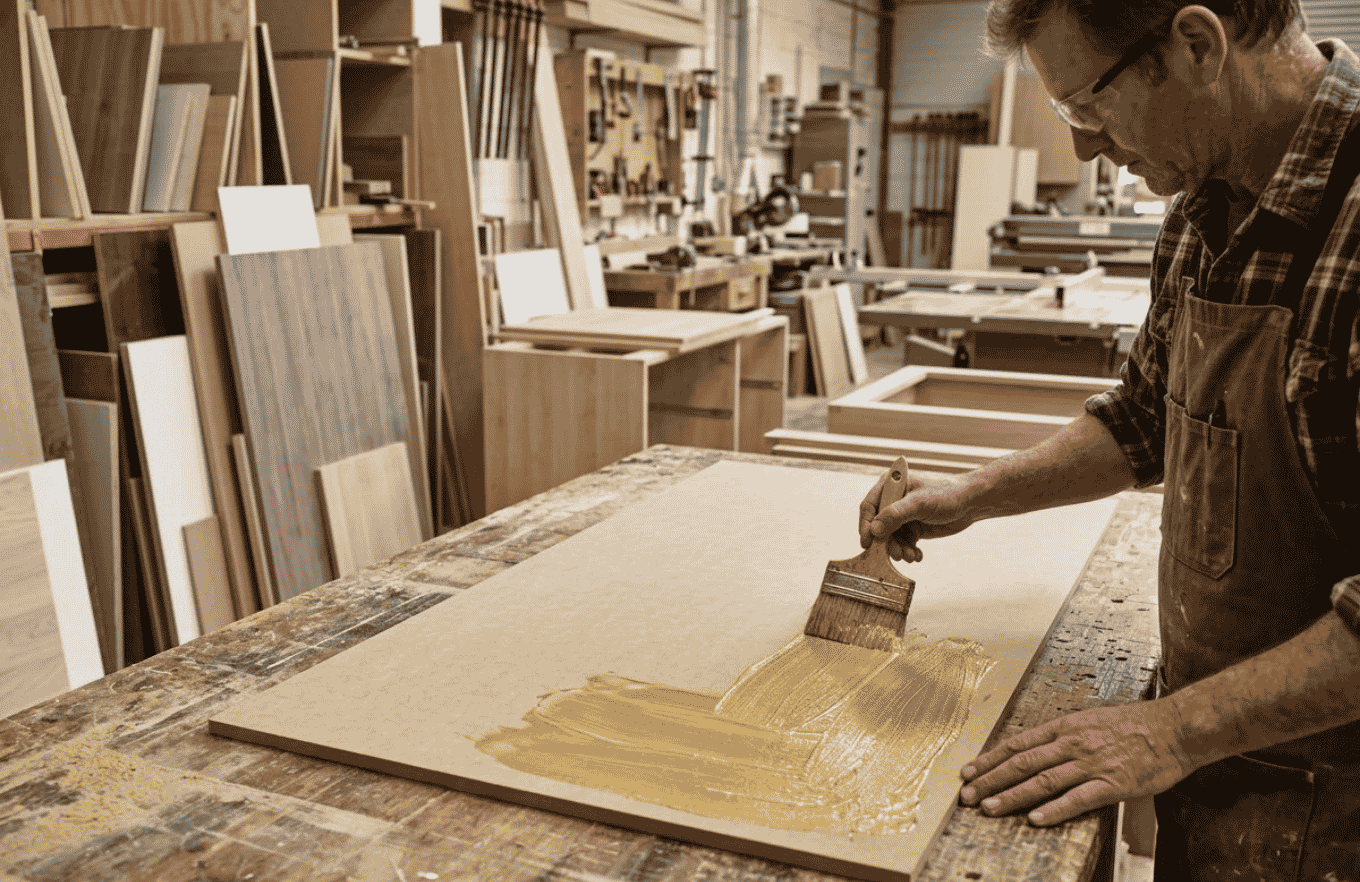
First-time buyers can avoid many common mistakes by starting with the application instead of the product name. Identify the surfaces, understand the production conditions, clarify how the adhesive will be applied, and discuss those requirements with the supplier.
Furthermore, comparing products on practical performance rather than price alone can provide a clearer picture of their role in manufacturing. Samad Adhesive can help buyers approach adhesive selection with greater attention to the actual bonding task.
Planning your next furniture bonding project? Contact Samad Adhesive to discuss suitable adhesive options for your specific manufacturing requirements.
Choosing an industrial adhesive is not simply a matter of finding the strongest or cheapest product available. New buyers can make better purchasing decisions by considering material compatibility, application conditions, production requirements, and the demands placed on the finished product. A thoughtful selection process also reduces the risk of using an adhesive outside its intended application. With products such as Samad Bond 101 and practical guidance around furniture bonding, buyers can approach adhesive selection with clearer expectations and a better understanding of what their manufacturing process actually needs.
First-time buyers should ask about material compatibility, surface preparation, application methods, drying or setting requirements, storage, and the intended use of the adhesive.
Its suitability depends on factors such as the surfaces being bonded, required bond performance, application method, and conditions surrounding the manufacturing process.
Samad Bond 101 is a polychloroprene-based contact adhesive designed for furniture bonding and is positioned for use by households and industries in Pakistan.