In B2B manufacturing, glue may look like a small part of the process, but the wrong bonding solution can create surprisingly big problems. Production delays, weak joints, rework, damaged products, and customer complaints can all trace back to an adhesive that was never right for the job.
That is why choosing Industrial Adhesive Manufacturers should be treated as a strategic purchasing decision rather than a simple product comparison. Buyers need consistency, material compatibility, dependable supply, technical understanding, and products that perform reliably across real production conditions.
A good supplier should fit into your manufacturing process, not force your process to fit the adhesive. In this blog, we’ll explore the key factors B2B buyers should consider when selecting an adhesive manufacturing partner, from product performance and consistency to technical support and long-term reliability.
Consistency matters enormously in manufacturing. An adhesive may perform well during one production run but create problems if viscosity, tack, drying behaviour, or bonding strength varies between batches.
The best manufacturer should maintain controlled production standards so businesses can achieve predictable results across repeated orders. This becomes particularly important for furniture, footwear, automotive, packaging, and other industries where bonding quality directly affects the finished product.
The best adhesive is not necessarily the strongest one. It is the one that works properly with the materials, surfaces, equipment, and production conditions involved.
Before partnering with a supplier, buyers should understand whether the adhesive suits substrates such as wood, leather, rubber, plastics, textiles, or synthetic materials. Application temperature, drying time, surface preparation, and pressing requirements should also be considered.

B2B buyers often need more than a container of adhesive. They may require guidance on application methods, surface preparation, curing conditions, or troubleshooting when bonding issues appear.
Industrial Adhesive Manufacturers that understand these practical challenges can provide greater value than suppliers focused only on selling products. Technical communication can also help manufacturers reduce unnecessary testing and minimise production interruptions.
A high-performing adhesive is of little use when it arrives late. Supply reliability should therefore be part of the purchasing evaluation.
Buyers should consider production capacity, order handling, packaging options, lead times, and the supplier’s ability to maintain consistent availability. A stable partnership can make production planning considerably easier.
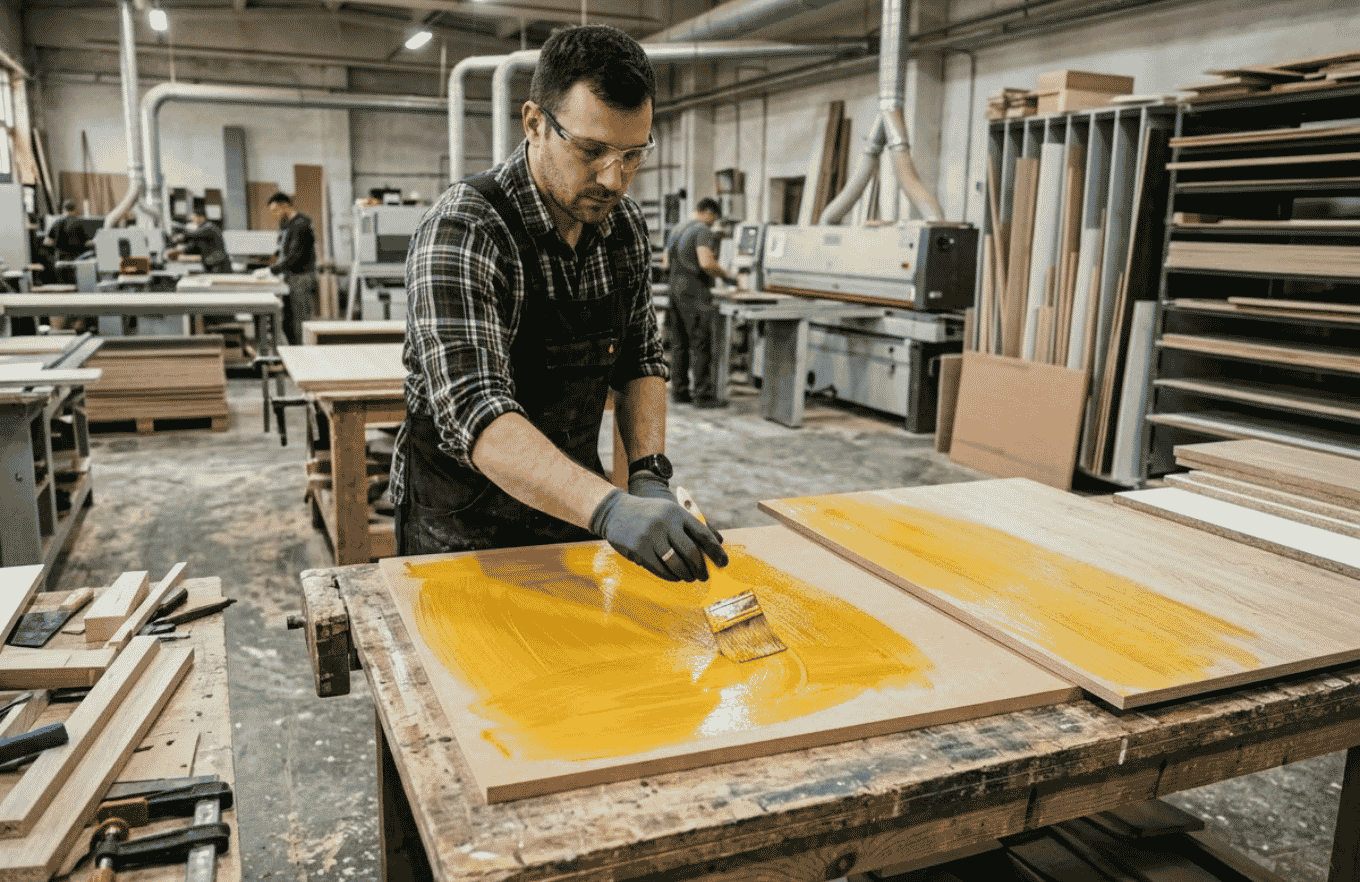
Furniture manufacturing presents its own bonding challenges. Materials may include wood, laminates, foam, leather, fabric, and other surfaces that require strong and dependable adhesion.
When selecting Contact Adhesive for Furniture, buyers should look at more than initial grab. Bond strength, application behaviour, drying characteristics, and suitability for the intended materials all influence the final result.
For example, Samad Bond 101 uses polychloroprene to provide strong bonding performance for furniture applications. Its positioning as a contact adhesive makes it relevant for manufacturers seeking a practical solution for furniture assembly and related bonding requirements.
A supplier with a clear understanding of manufacturing applications can help buyers make better decisions. Moreover, material knowledge allows adhesive selection to focus on actual production requirements instead of attractive but irrelevant specifications.
For furniture producers, Contact Adhesive for Furniture should be assessed according to the specific substrates and assembly process. Similarly, manufacturers working with rubber, leather, plastics, or textiles need solutions suited to those materials.
Samad Adhesive approaches adhesive solutions with practical industrial applications in mind, helping buyers evaluate products according to their intended use rather than relying on generic claims.
The strongest B2B relationships develop when communication continues after the first order. Buyers should look for manufacturers that listen to production concerns, respond clearly to technical questions, and maintain consistent product standards.
Furthermore, reviewing performance over time can reveal whether a supplier is genuinely supporting business needs. Pricing matters, but so do consistency, responsiveness, product suitability, and dependable supply.
Samad Adhesive provides products such as Samad Bond 101 for businesses looking for established bonding solutions across practical applications.
Before committing to a supplier, compare the adhesive against your actual production requirements. Consider performance, compatibility, technical assistance, consistency, availability, and overall value rather than focusing solely on price.
Most importantly, test the product under realistic production conditions whenever possible. A successful laboratory result does not automatically guarantee the same performance on a busy manufacturing line.
For businesses evaluating Contact Adhesive for Furniture, practical testing can help confirm whether the product delivers the required bond strength and application performance.
Samad Adhesive can be considered as part of that evaluation when manufacturers are seeking reliable adhesive options for their operational requirements.
Selecting the right adhesive partner is ultimately about reducing uncertainty. The right manufacturer should offer suitable products, consistent quality, practical support, and dependable supply that aligns with your production needs.
For B2B buyers, that makes supplier evaluation just as important as adhesive selection. Taking the time to assess these factors can support smoother production, stronger finished products, and more confident purchasing decisions.
Partner with Samad Adhesive for the best bonding solutions, consistent quality, and practical support tailored to your manufacturing needs. Contact our team today to discuss your requirements.
Evaluate product compatibility, batch consistency, technical support, supply reliability, application requirements, and performance under actual production conditions.
Consider substrate compatibility, bond strength, drying behaviour, application method, production conditions, and the manufacturer’s technical support.
Samad Bond 101 is a polychloroprene-based contact adhesive designed for strong bonding and is positioned for furniture-related applications.