Furniture production is changing. Modern designs are becoming more detailed, materials are becoming more varied, and manufacturers are under constant pressure to improve efficiency without compromising the finished product. Behind many of these changes sits an often-overlooked component: adhesive. The role of Industrial Adhesive Manufacturers is moving beyond simply supplying bonding products as furniture makers look for solutions that fit faster production, diverse materials, and demanding performance requirements. Adhesives now have to work as part of the manufacturing process, not merely at the end of it. In this blog, we’ll explore how changing furniture trends, application needs, material choices, and production expectations could shape the next generation of industrial adhesive solutions.
Furniture manufacturing has moved well beyond traditional wood-to-wood construction. Laminates, veneers, fabrics, plastics, foams, and other components are increasingly incorporated into contemporary designs.
This creates a need for adhesives that can accommodate different surfaces while maintaining the desired bond. A suitable Contact Adhesive for Furniture can offer practical bonding for applications where fast handling, strong adhesion, and surface coverage are important.
Samad Adhesive understands this shift through solutions developed for furniture and other manufacturing environments. The future will likely favor adhesives that are easier to integrate into production rather than products that require manufacturers to completely rethink their existing workflows.

The cheapest adhesive is not always the most economical option. Weak bonding can result in rework, wasted materials, production interruptions, and finished products that require repair.
Furniture manufacturers are increasingly likely to evaluate adhesive performance according to the complete production picture. Bond strength, application behavior, drying characteristics, material compatibility, and long-term performance can all influence the actual cost of a bonding solution.
That makes Contact Adhesive for Furniture particularly relevant when manufacturers need strong, practical adhesion across furniture components. Samad Bond 101, for example, uses polychloroprene to provide strong bonding and is positioned for both household and industrial applications.
One of the biggest challenges ahead is the growing variety of materials used in furniture design. A single product may combine wood, laminate, synthetic surfaces, fabrics, foam, or decorative elements.
Rather than relying on one adhesive for every situation, manufacturers need to understand how bonding solutions behave with specific substrates. Technical guidance from Industrial Adhesive Manufacturers can become increasingly valuable here because correct product selection can prevent compatibility issues before they reach the production floor.
Furthermore, application conditions matter just as much as the adhesive itself. Surface preparation, coverage, pressure, and working time can influence the final result.
Furniture factories are constantly looking for ways to reduce unnecessary steps. Adhesive technology will naturally follow that direction.
Products that fit efficiently into production processes can help manufacturers manage large volumes while maintaining consistent results. Easier application, predictable working characteristics, and suitable drying behavior can all contribute to smoother operations.
A modern Contact Adhesive for Furniture therefore needs to be considered as part of the complete manufacturing workflow. Samad Adhesive's Samad Bond 101 reflects the continued importance of contact bonding for furniture applications where strong adhesion is central to assembly.
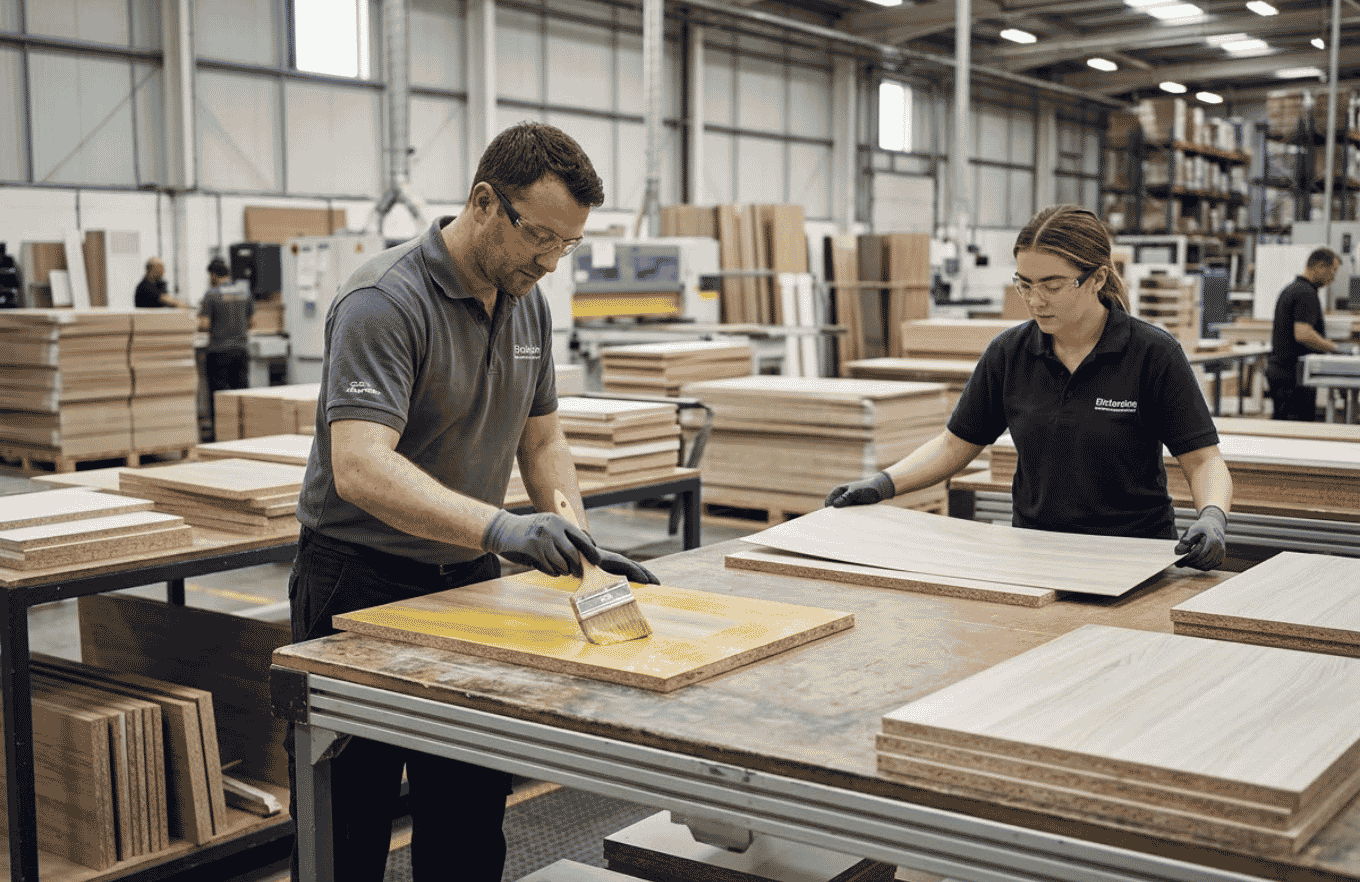
Even an excellent adhesive can underperform when it is incorrectly applied. As furniture designs become more sophisticated, manufacturers may need greater guidance on surface preparation, application methods, and material combinations.
This is where the role of Industrial Adhesive Manufacturers can expand. Instead of simply supplying products, manufacturers can help businesses understand which bonding approach suits particular production requirements.
Samad Adhesive's focus on furniture bonding demonstrates how product knowledge can support practical manufacturing decisions. The future of adhesive supply is therefore likely to involve more technical conversations and fewer one-size-fits-all recommendations.
Furniture manufacturers are also paying closer attention to material efficiency and production waste. Adhesives can contribute to this discussion when their application helps reduce failed assemblies, unnecessary material use, and repeated processing.
The next generation of Industrial Adhesive Manufacturers will likely need to consider not only how strongly an adhesive bonds, but also how effectively it fits changing manufacturing expectations.
Contact Samad Adhesive today to discuss furniture bonding solutions suited to your materials, production process, and evolving manufacturing requirements.
The future of furniture bonding will be shaped by more than stronger adhesives alone. Material diversity, production efficiency, application knowledge, waste reduction, and changing design expectations will all influence how manufacturers approach bonding. Furniture makers will increasingly need solutions that work naturally within their production systems while delivering the performance their products demand. As these expectations evolve, adhesive technology will become an increasingly important part of furniture manufacturing rather than an afterthought. The businesses that understand this shift can make more informed choices about materials, processes, and product quality.
Modern furniture uses a wider range of materials and designs, making effective bonding important for assembly, appearance, durability, and production efficiency.
Contact Adhesive for Furniture can be used to bond compatible furniture surfaces where strong adhesion and practical application are required during assembly.
Samad Bond 101 is made with polychloroprene and is designed to provide strong bonding for furniture-related applications across household and industrial settings.