Adhesive may be a small line on a manufacturing budget, but its financial impact can stretch much further than the purchase invoice. Poor bonding can lead to rework, material waste, production delays, and dissatisfied customers, quietly adding costs at several stages. That is why the choice of Industrial Adhesive Manufacturers deserves attention from both production and purchasing teams. The right adhesive solution can support smoother operations while helping businesses make better use of materials, labor, and production time. In this blog, we’ll explore how the quality of an adhesive partnership can influence overall manufacturing costs and why looking beyond the initial price can reveal the bigger financial picture.
Comparing adhesives by price per kilogram can be misleading. A lower-cost product may require more applications, longer processing times, or additional corrective work, which can quickly change the economics.
Consider a furniture manufacturer producing hundreds of panels every day. If bonding problems force even a small percentage of pieces into rework, the business is not only using more adhesive. It is also spending additional labor hours and consuming materials that were already part of the production cost.
That is where the broader value offered by Industrial Adhesive Manufacturers becomes important. Product performance needs to be considered alongside application efficiency and production outcomes.
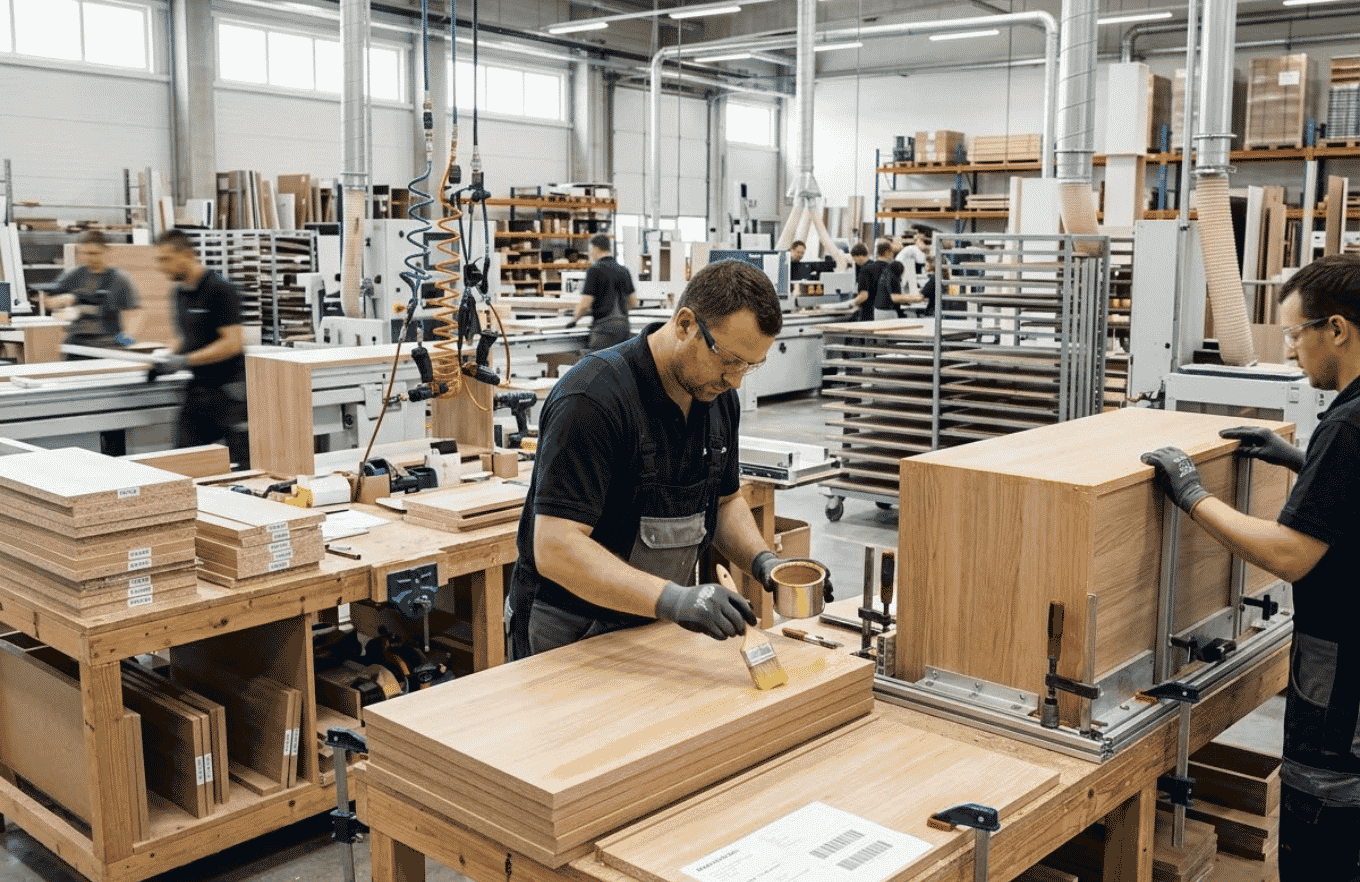
Rework is one of those manufacturing expenses that can hide in plain sight. A product may need to be reopened, repositioned, cleaned, or bonded again because the original adhesive did not perform as expected.
For furniture applications, the role of Furniture Adhesive Suppliers in Pakistan can therefore extend beyond simply supplying a container of adhesive. Product selection should reflect the surfaces, production process, expected load, and finishing requirements involved.
Samad Adhesive offers solutions such as Samad Bond Ultra, which is designed for modern manufacturing and used across furniture, footwear, automotive, and textile applications. Its strong, durable bonding can support applications where repeated handling and long-term adhesion matter.
Time is money, especially when manufacturing runs on tight schedules. Adhesives that fit smoothly into existing production processes can help teams avoid unnecessary interruptions.
Application characteristics matter here. If workers have to repeatedly adjust surfaces, wait excessively between stages, or correct inconsistent bonding, production efficiency can suffer. A well-matched adhesive helps create a more predictable workflow.
Moreover, businesses working with Furniture Adhesive Suppliers in Pakistan can assess whether the supplied solution aligns with their equipment, materials, and production pace before committing to large-scale use. This simple evaluation can prevent an inexpensive adhesive from becoming an expensive operational problem.
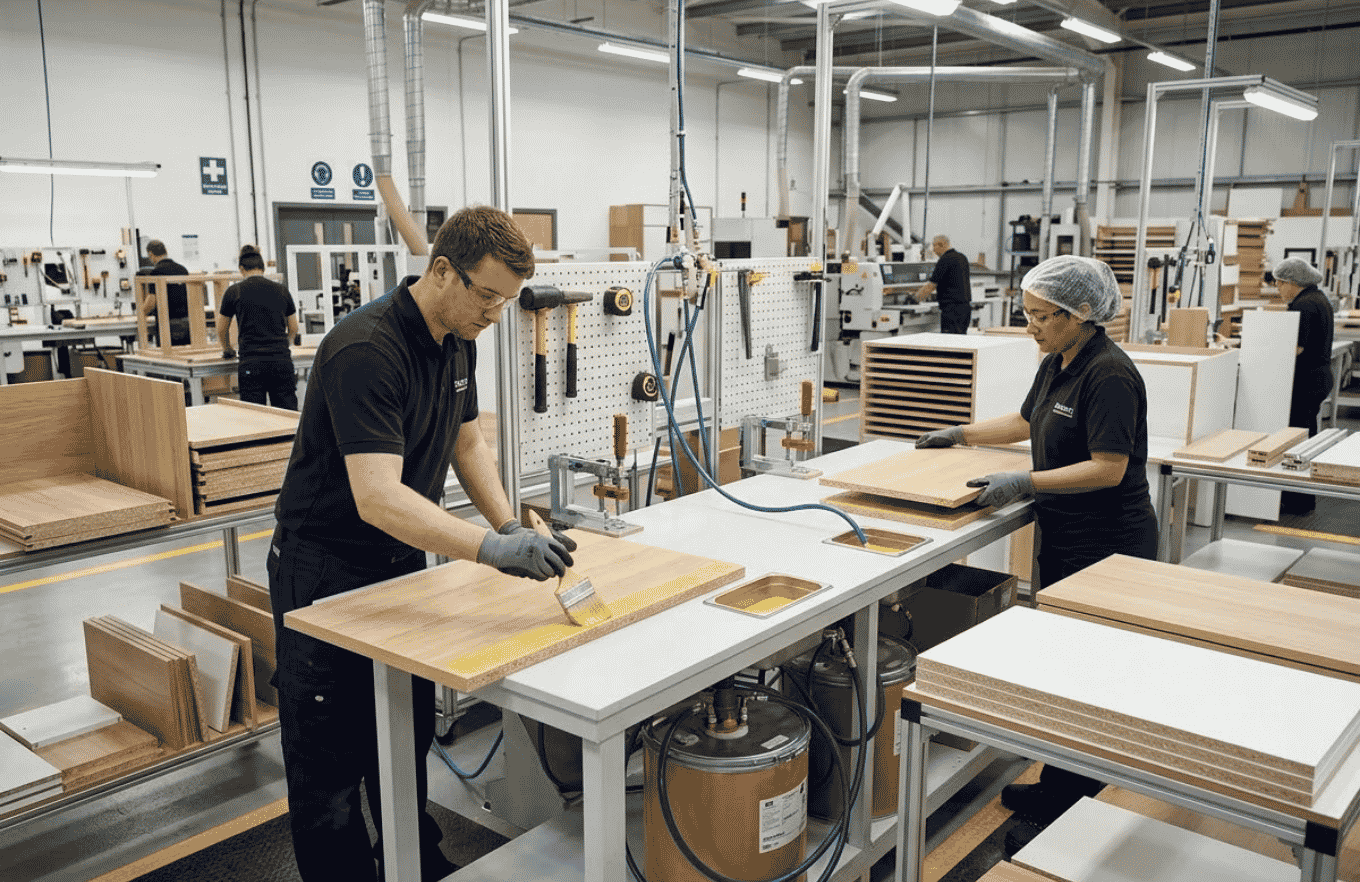
Every failed bond has the potential to waste more than adhesive. Depending on the manufacturing process, it may also involve wood panels, laminates, fabrics, leather, rubber, or finished components.
Premium bonding solutions can therefore contribute financially by helping manufacturers protect the materials already invested in each product. Samad Adhesive’s Ultra Bond is formulated for applications across several industries, giving businesses an option for demanding bonding requirements where durability matters.
The goal is not simply to use more adhesive. It is to select a formulation that provides the required bond while fitting the materials and application method correctly.
The financial consequences of adhesive selection can continue after a product leaves the factory. Bond failure can result in returns, repairs, replacement products, or customer complaints.
A furniture company, for example, may save a small amount during production by selecting a cheaper adhesive but face significantly higher costs if finished furniture develops bonding issues after delivery. Most importantly, the purchasing decision should consider the expected performance of the finished product, not just the cost of the adhesive itself.
Working with experienced Industrial Adhesive Manufacturers can also give production teams access to application knowledge that helps them match adhesive performance with real manufacturing conditions.
A smarter purchasing approach looks at total cost rather than the number printed on the adhesive container. Businesses can compare coverage, application requirements, production speed, material compatibility, waste, rework, and expected product performance.
For manufacturers evaluating Furniture Adhesive Suppliers in Pakistan, this broader calculation can make supplier comparisons much more meaningful. Samad Adhesive supports industrial bonding requirements with products designed for applications where strong and lasting adhesion is an important part of the finished product.
Talk to Samad Adhesive today about practical bonding solutions that can help control production costs and improve manufacturing efficiency.
Adhesive purchasing decisions can influence far more than the raw-material budget. The right formulation can affect labor use, material waste, production flow, rework, and the long-term performance of finished products. Looking at these factors together gives manufacturers a clearer picture of true bonding costs. Rather than focusing solely on the lowest purchase price, businesses can assess how an adhesive fits their process, materials, and quality expectations. A thoughtful approach turns adhesive selection from a routine purchasing task into a meaningful part of smarter cost management.
The right adhesive can help reduce rework, material waste, application issues, production interruptions, and costs associated with poorly bonded finished products.
They should consider material compatibility, bond performance, application requirements, production volume, technical support, and the overall cost impact of the adhesive.
Samad Bond Ultra is a versatile adhesive designed for modern manufacturing and is used in furniture, footwear, automotive, and textile applications.