
The performance of rubber adhesive for industrial use is often judged by strength numbers and lab results, yet real-world failures still catch manufacturers off guard. In factories, workshops, and assembly lines, bonding issues rarely announce themselves early. They show up quietly, after production schedules are locked and costs are already sunk. This gap between expectation and reality is where most adhesive failures live. When rubber adhesive for industrial use underperforms, the cause is rarely the product alone. It is usually a chain reaction of small decisions that seemed harmless at the time but proved costly later. Understanding these undocumented failures is essential for anyone serious about industrial reliability.
Most industrial bonding failures never reach a formal failure analysis. They are fixed quickly, written off as “process variation,” and quietly absorbed into operating costs. An experienced industrial adhesive manufacturer understands this pattern well. The pressure to maintain production flow often outweighs the need to investigate root causes. As a result, valuable data is lost.
In many cases, the adhesive itself performs exactly as designed. The failure happens because the surrounding conditions drifted beyond acceptable limits. Temperature fluctuations, surface contamination, or rushed application steps can compromise even premium formulations. Companies like Samad Adhesive are engineered to perform under demanding conditions, but no adhesive is immune to misuse. When documentation is skipped, the same mistakes repeat across shifts, teams, and facilities.

Surface preparation is the most underestimated factor in adhesive performance. Rubber adhesive for industrial use depends heavily on clean, compatible substrates. Oils, release agents, and even microscopic dust layers interfere with bonding at the molecular level. These contaminants rarely cause immediate failure. Instead, they shorten bond life, leading to peeling, creep, or sudden detachment weeks later.
An industrial adhesive manufacturer may specify surface requirements clearly, yet production realities often override guidelines. When operators clean surfaces “just enough,” the adhesive initially holds, creating a false sense of success. Over time, stress exposure reveals the weakness. Samad Adhesive formulations are designed to tolerate real-world conditions, but even robust systems require disciplined surface control to deliver consistent results.
Rubber adhesive for industrial use behaves differently under heat, vibration, and humidity than it does in controlled environments. Many failures stem from underestimating these stresses during product selection. Adhesives that perform well indoors may degrade rapidly in open or semi-controlled facilities.
An industrial adhesive manufacturer considers long-term exposure scenarios during formulation, but end users often focus only on initial bond strength. Repeated thermal cycling causes expansion and contraction that gradually weakens the bond line. Vibration introduces micro-movements that accelerate fatigue. Samad Adhesive products are often chosen for their resilience, yet even they require correct matching to operating environments to avoid premature failure.
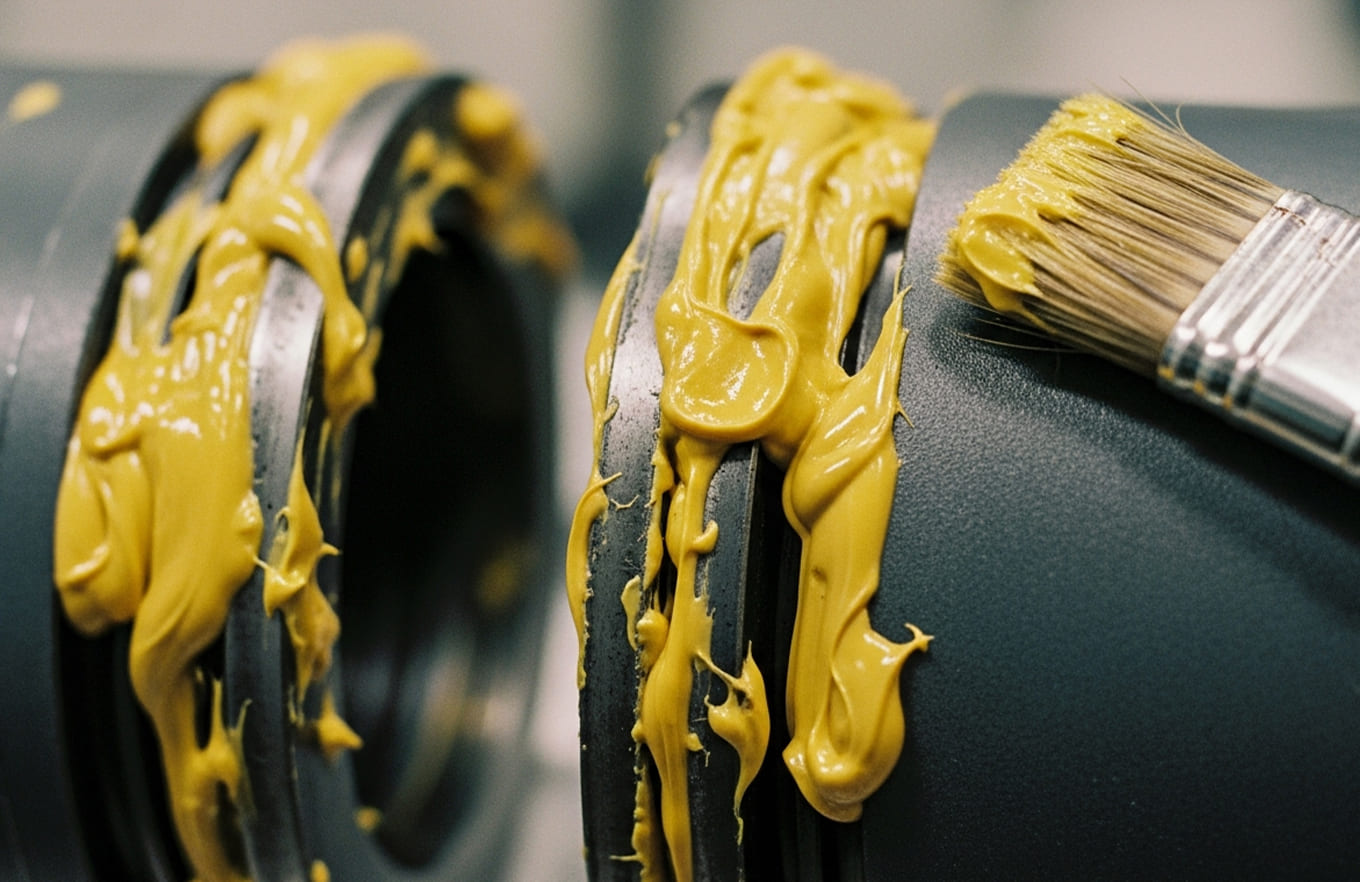
Another undocumented issue lies in application thickness. Too little adhesive leads to insufficient contact, while excessive application traps solvents and delays curing. Rubber adhesive for industrial use relies on a precise balance. Deviations often come from well-meaning attempts to “add extra safety.”
Cure time is equally misunderstood. Production pressure encourages early handling, stacking, or load application. Bonds appear stable but have not fully developed their mechanical properties. An experienced industrial adhesive manufacturer will warn against this practice, yet it remains common. Samad Adhesive systems are formulated for predictable curing behavior, but shortcuts during this phase compromise long-term performance more than most teams realize.
Not all rubber substrates behave the same way. Rubber adhesive for industrial use must interact with fillers, plasticizers, and surface treatments that vary widely across materials. Assuming compatibility based on appearance or experience often leads to failure.
Industrial adhesive manufacturer testing typically focuses on standardized materials. Real-world variations introduce unpredictable behavior. Some rubbers migrate oils over time, weakening adhesion from within. Others harden or soften under operational stress. Samad Adhesive products are tested across a broad range of substrates, but proper evaluation at the application level remains critical to avoid undocumented failures.
Over time, processes drift. Equipment calibration changes, operators develop shortcuts, and environmental controls loosen. Rubber adhesive for industrial use is sensitive to these shifts. What worked six months ago may fail today under slightly altered conditions.
An industrial adhesive manufacturer often supports initial setup but may not be present when gradual changes occur. This is where silent failures originate. Regular audits and retraining help maintain consistency. Samad Adhesive performance remains reliable when processes are respected, but even high-quality systems cannot compensate for unchecked variation indefinitely.
Documenting adhesive failures is not about assigning blame. It is about protecting margins and improving reliability. When rubber adhesives for industrial use are recorded and analyzed, patterns emerge. These insights help refine application methods, material choices, and training programs.
Industrial adhesive manufacturer partnerships thrive on this feedback loop. Samad Adhesive benefits from real-world data, while users gain better guidance and support. Over time, documented learning reduces waste, rework, and downtime in measurable ways.
Selecting the right industrial adhesive manufacturer goes beyond product selection. It involves technical support, transparent data, and application-specific guidance. Rubber adhesive for industrial use performs best when manufacturers and users collaborate rather than operate in isolation.
Samad Adhesive has built its reputation by understanding these realities. Their approach reflects practical manufacturing environments, not just laboratory conditions. When failures are openly discussed instead of quietly fixed, everyone benefits.
Failures in rubber adhesive for industrial use rarely come from a single dramatic mistake. They emerge from small oversights, environmental pressures, and undocumented process changes. By understanding these hidden failure points and working closely with a trusted industrial adhesive manufacturer, companies can move from reactive fixes to proactive reliability. The result is stronger bonds, lower waste, and smoother operations that hold up under real-world demands.
Contact our adhesive experts today to evaluate your bonding process and eliminate preventable industrial adhesive failures.
Delayed failure often results from poor surface preparation, environmental stress, or premature load application before full curing occurs.
An industrial adhesive manufacturer provides application guidance, material compatibility testing, and process optimization support tailored to real conditions.
Yes, but only when the adhesive formulation, surface preparation, and curing process are matched correctly to vibration levels.

.svg)