A growing footwear business can handle bigger orders, tighter deadlines, and changing designs, but weak bonding should never become part of that growth story. The adhesive behind every sole, upper, and leather component quietly influences how a finished product performs. That makes choosing the best Shoe Glue Suppliers more important than simply finding a product at the right price. Consistent quality, material compatibility, technical support, and reliable supply can make production smoother and reduce costly rework. As your business expands, the right supplier should fit your production needs rather than create another problem to manage. In this blog, we’ll look at five practical tips to help you evaluate suppliers and make a smarter long-term choice.
Low pricing can look attractive when production volumes increase, but adhesive costs should be judged alongside performance. A product that causes weak bonds, repeated applications, or rejected footwear can quickly become more expensive.
Instead, consider the complete value offered by the supplier. Consistent adhesive quality, suitable packaging sizes, technical guidance, and dependable availability can have a greater impact on production costs over time. Samad Adhesive, for example, focuses on bonding solutions designed around demanding manufacturing requirements rather than treating adhesive as a basic commodity.
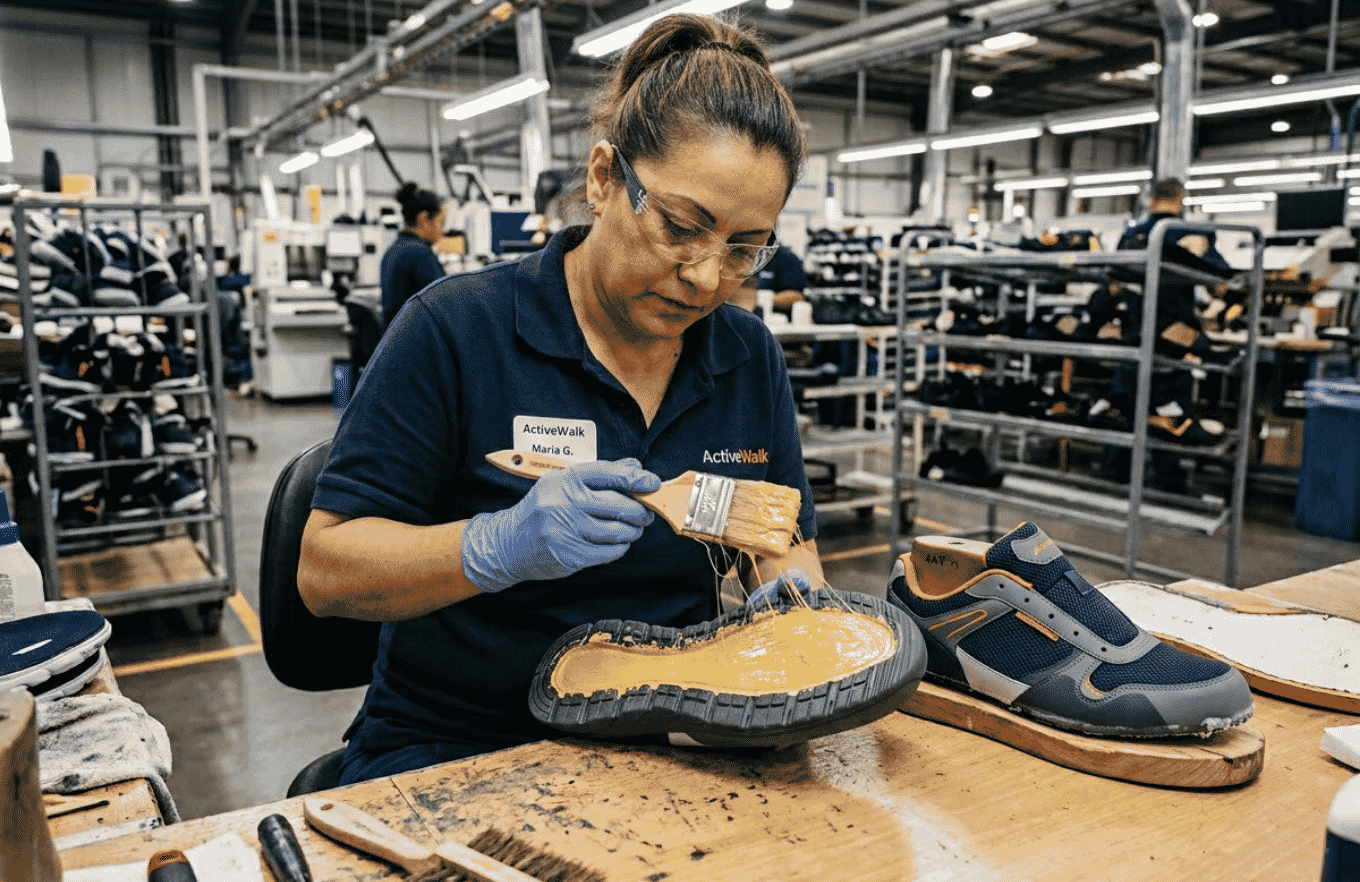
Footwear rarely involves just one material. A single design may combine leather, synthetic leather, rubber, EVA, PVC, PU, canvas, textiles, or other components. The adhesive needs to create a dependable bond without damaging the materials or affecting the appearance of the finished product.
A useful evaluation starts by asking whether the supplier understands these combinations. A suitable PU Adhesive for Shoes should offer strong adhesion while maintaining performance under flexing, heat, and regular wear. Profix PU Adhesive supports bonding across materials including TPR, PVC, PU, EVA, natural rubber, nitrile rubber, leather, suede, canvas, textiles, foams, and selected plastics.
A bond that looks strong immediately may not perform the same way after weeks of use. Footwear experiences constant flexing, temperature changes, moisture, pressure, and friction, so adhesive performance needs to go beyond the production line.
Heat resistance is particularly important when shoes are exposed to demanding conditions. Plasticizer resistance can also matter when bonding PVC and synthetic materials. Moreover, a transparent finish can help maintain a cleaner appearance on premium footwear.
With these factors in mind, PU Adhesive for Shoes becomes more than a bonding material; it becomes part of the product’s long-term performance. Samad Adhesive’s Profix is formulated with heat resistance, plasticizer resistance, and a crystal-clear finish for applications where appearance and durability both matter.
Even a high-performance adhesive needs the right application process. Surface preparation, adhesive coverage, tack-drying time, heat activation, and pressing conditions can all influence the final bond.
A supplier that can explain these practical requirements adds genuine value. For example, Profix may require surface priming where necessary, followed by application to both surfaces, tack-drying, heat activation, and pressing. This kind of guidance helps production teams use the adhesive correctly instead of simply assuming that more glue means a stronger bond.
Furthermore, reliable Shoe Glue Suppliers should be willing to discuss application conditions and help businesses identify potential bonding issues before they become production problems.

Your adhesive requirements may change as your footwear business expands. New product lines, larger orders, different materials, or higher production standards can all require greater flexibility from your supplier.
Look for a company with relevant technical knowledge, consistent product quality, practical support, and the ability to serve different applications. Samad Adhesive provides solutions such as Profix for footwear and leather craft, while its bonding expertise also extends to leather goods, automotive trimming, and technical repairs.
Most importantly, the right PU Adhesive for Shoes should support your production goals rather than limit them. A supplier who understands both the adhesive and its application can become a valuable part of your manufacturing process.
Ready to improve footwear bonding with a dependable adhesive solution? Contact Samad Adhesive today and discuss the right option for your production needs.
All in all, choosing an adhesive supplier is ultimately a decision about consistency, performance, and long-term production confidence. By examining material compatibility, real-world durability, application requirements, and supplier reliability, growing footwear businesses can avoid many common bonding headaches. The right partnership can help maintain quality as production scales, giving every pair a stronger foundation from sole to upper.
Look for consistent product quality, material compatibility, technical support, dependable supply, and adhesives designed for your specific footwear applications.
Yes. A suitable PU Adhesive for Shoes can bond materials such as leather, synthetic leather, rubber, EVA, PVC, PU, canvas, textiles, and selected plastics.
Heat resistance helps maintain bond integrity when footwear experiences elevated temperatures during manufacturing or everyday use, reducing the risk of premature sole separation.