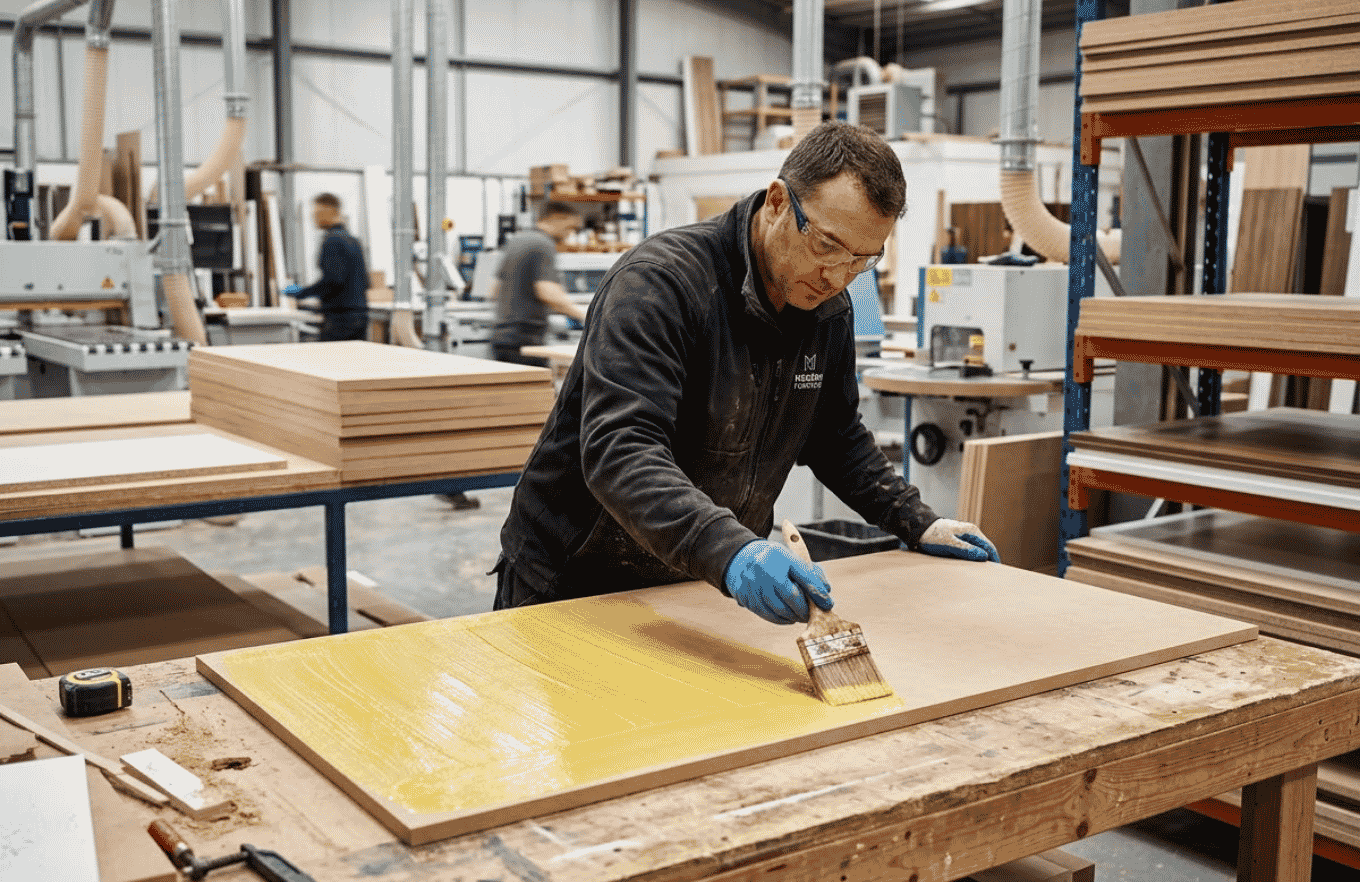
Furniture assembly has come a long way from simply drilling, hammering, and hoping everything stays in place. Modern furniture makers increasingly look for bonding methods that deliver strength without leaving obvious marks or adding unnecessary hardware. This is where contact adhesive for furniture becomes a practical choice for many applications. It can create a clean bond between compatible surfaces while supporting a smoother production process. From decorative panels and laminates to leather and other furniture materials, the right adhesive can make a noticeable difference. But why choose adhesive over traditional nails and screws? In this blog, we will look at five practical reasons that explain the shift and what furniture manufacturers should consider before making the switch.
One of the biggest advantages of adhesive bonding is appearance. Nails and screws create visible entry points that may need plugs, fillers, caps, or additional finishing work. For premium furniture, even small marks can affect the final look.
A suitable adhesive can hold materials together without creating holes across the visible surface. This is particularly useful when working with decorative laminates, veneers, upholstery materials, and finished panels where appearance matters just as much as structural performance.
The result is a smoother, more seamless design with fewer interruptions across the furniture surface. For manufacturers producing modern or minimalist pieces, that visual difference can be significant.
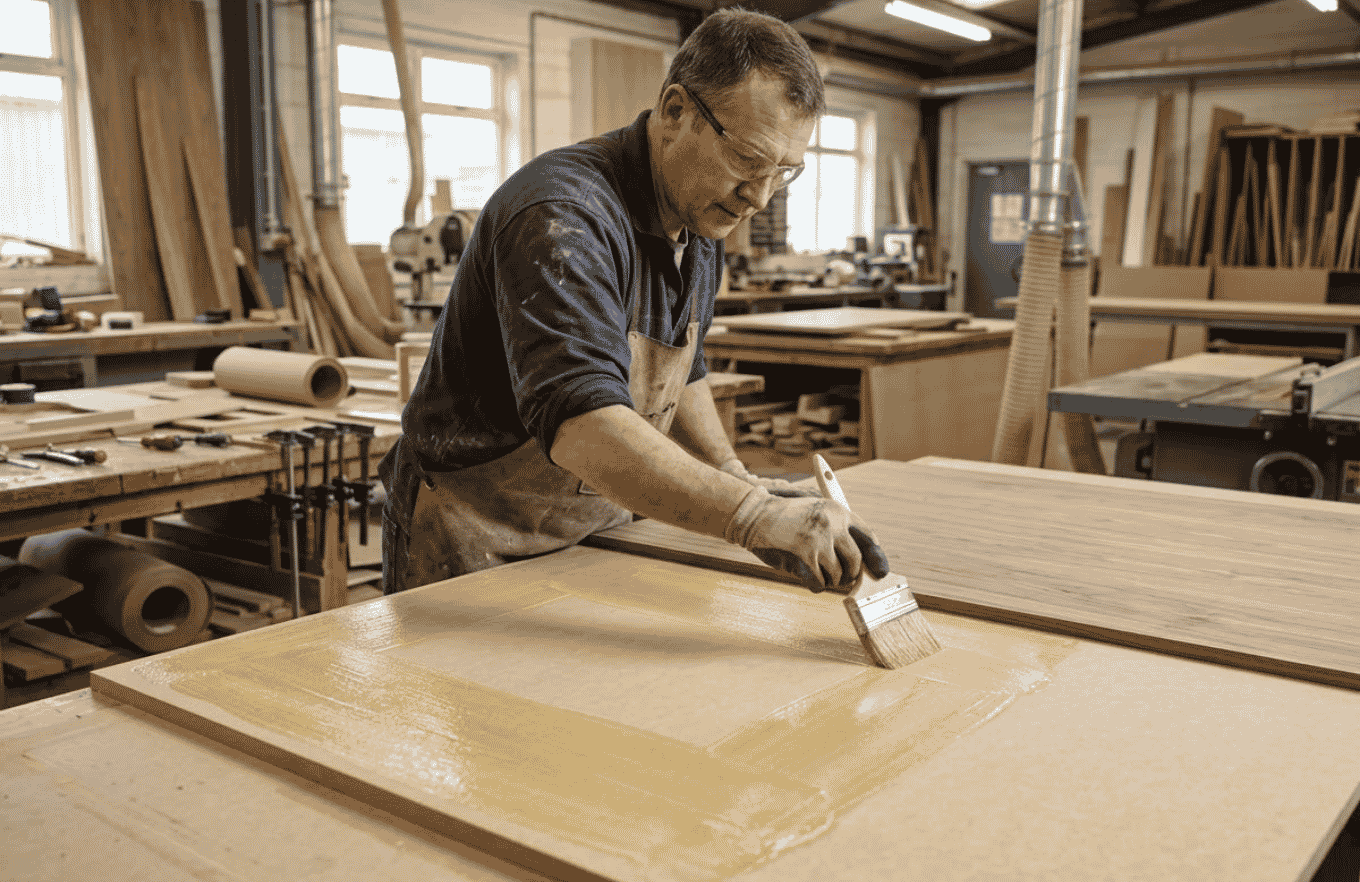
Nails and screws concentrate holding force around specific points. Adhesive bonding works differently by spreading the bond across the contact area between two surfaces.
This broader contact can be useful when joining materials where point fastening may not provide the desired finish or performance. A properly selected adhesive can create consistent contact between surfaces instead of relying entirely on individual mechanical fasteners.
For furniture makers, this approach can be especially useful for bonding laminates, synthetic materials, leather components, and other compatible surfaces. Samad Bond Ultra, for example, is designed as a versatile adhesive for modern manufacturing and is used across furniture and other industries where durable bonding is required.
Furniture is no longer limited to rigid wood-and-screw construction. Manufacturers work with combinations of wood-based panels, laminates, textiles, foams, leather, plastics, and synthetic materials.
That variety can make mechanical fastening complicated. Drilling into certain materials may damage the surface, while screws may not be suitable for thin or flexible components.
Contact adhesive for furniture can provide another option where compatible materials require bonding without visible mechanical hardware. Its usefulness becomes particularly clear in furniture components that need a smooth surface or involve materials that are difficult to secure with conventional fasteners.
Time matters on a production floor. Every drilling, fastening, filling, and finishing step can add to labor requirements and production time.
Adhesive bonding can simplify certain assembly operations by reducing dependence on individual mechanical fasteners. Once surfaces have been properly prepared and the adhesive is applied according to its requirements, components can be positioned and pressed together.
This can reduce the number of visible fastening points that require additional finishing. For manufacturers producing furniture at scale, those small process improvements can add up across hundreds or thousands of units.
However, speed should never replace correct application. Surface preparation, adhesive coverage, open time, pressure, and curing requirements all influence the final result. A faster process is only valuable when it consistently produces a reliable bond.
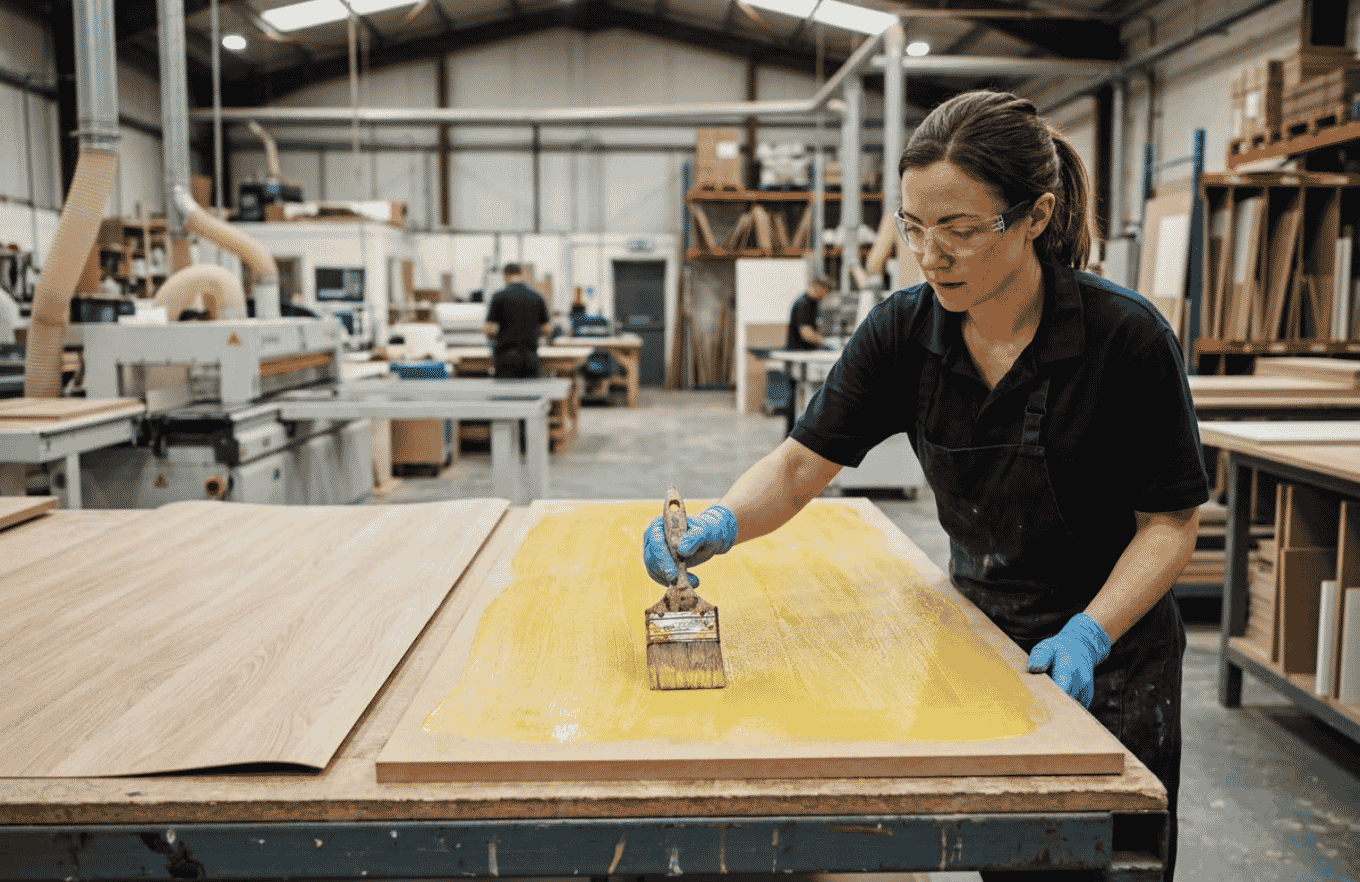
The goal of choosing an adhesive is not simply to eliminate screws or nails. It is to create a bonding system that matches the materials, design, and expected use of the furniture.
A quality adhesive can support strong and durable connections when applied correctly. Industrial adhesive manufacturers develop formulations for different material combinations and production requirements, allowing manufacturers to select products according to their specific application rather than relying on one bonding method for everything.
Samad Adhesive focuses on adhesive solutions suited to industrial applications, including furniture manufacturing. Product selection should always consider the substrates involved, environmental conditions, required bond strength, and the production process.
Replacing mechanical fasteners with adhesive is not automatically the right decision for every furniture component. Material compatibility comes first.
The surfaces should be clean, dry, and properly prepared. Contaminants such as dust, oil, or moisture can interfere with bonding. Manufacturers should also consider whether the adhesive is appropriate for the specific materials being joined and whether the finished product will experience heat, moisture, movement, or repeated stress.
An adhesive designed for one application may not perform equally well in another. This is why working with experienced industrial adhesive manufacturers can help furniture producers identify suitable formulations and application methods.
Samad Adhesive can be considered when manufacturers are evaluating bonding solutions for furniture and other industrial applications. The focus should always remain on achieving the right combination of strength, appearance, durability, and production efficiency.
Nails and screws still have their place in furniture construction, but they are no longer the only practical route to reliable assembly. Adhesive bonding offers a cleaner appearance, broader surface contact, greater design flexibility, and the potential to streamline production.
For furniture makers, the smart approach is not simply choosing adhesive because it is modern. It is selecting the right bonding solution for the specific materials and demands of each component. Samad Bond Ultra represents one example of a versatile adhesive designed for manufacturing applications where strong, durable bonding is important.
Most importantly, successful adhesive bonding depends on proper preparation and application, not just the product itself.
Talk to Samad Adhesive today for reliable furniture bonding solutions tailored to your materials, production process, and performance requirements.
The move from traditional fasteners toward adhesive bonding reflects the changing demands of furniture manufacturing. Cleaner designs, mixed materials, faster assembly, and durable performance all make adhesive technology increasingly relevant.
With the right product and application process, contact adhesive for furniture can provide a practical alternative to nails and screws for many compatible applications. The key is choosing a formulation that matches the job and applying it correctly from the start.
No. Adhesive suitability depends on the specific substrates, surface condition, and application requirements. Compatibility should be confirmed before production use.
Not always. Adhesive can replace mechanical fasteners in many suitable applications, but some furniture components may still require mechanical support for structural or safety reasons.
Proper surface preparation, correct adhesive application, suitable pressure, and following the manufacturer's recommended process can significantly improve bonding consistency.

.svg)